Skip to content
Invest HatayInvest Hatayby Burç Consulting

Tourism Investment Consulting

From UNESCO gastronomy city Antakya to the Samandağ coastline: feasibility and setup consulting for boutique hotels, restaurants and hospitality ventures.

A tourism story where history, nature and cuisine meet

Antakya holds UNESCO Creative City of Gastronomy status, and Hatay's Mediterranean coastline, historic fabric and rich culinary culture give it strong, still-untapped tourism investment potential.

The reconstruction process is also raising demand for accommodation capacity in the region, creating an opening for early investors in boutique hospitality, restaurants and experience tourism.

From concept development and site selection to licensing and feasibility, we're with you at every stage of your tourism investment.

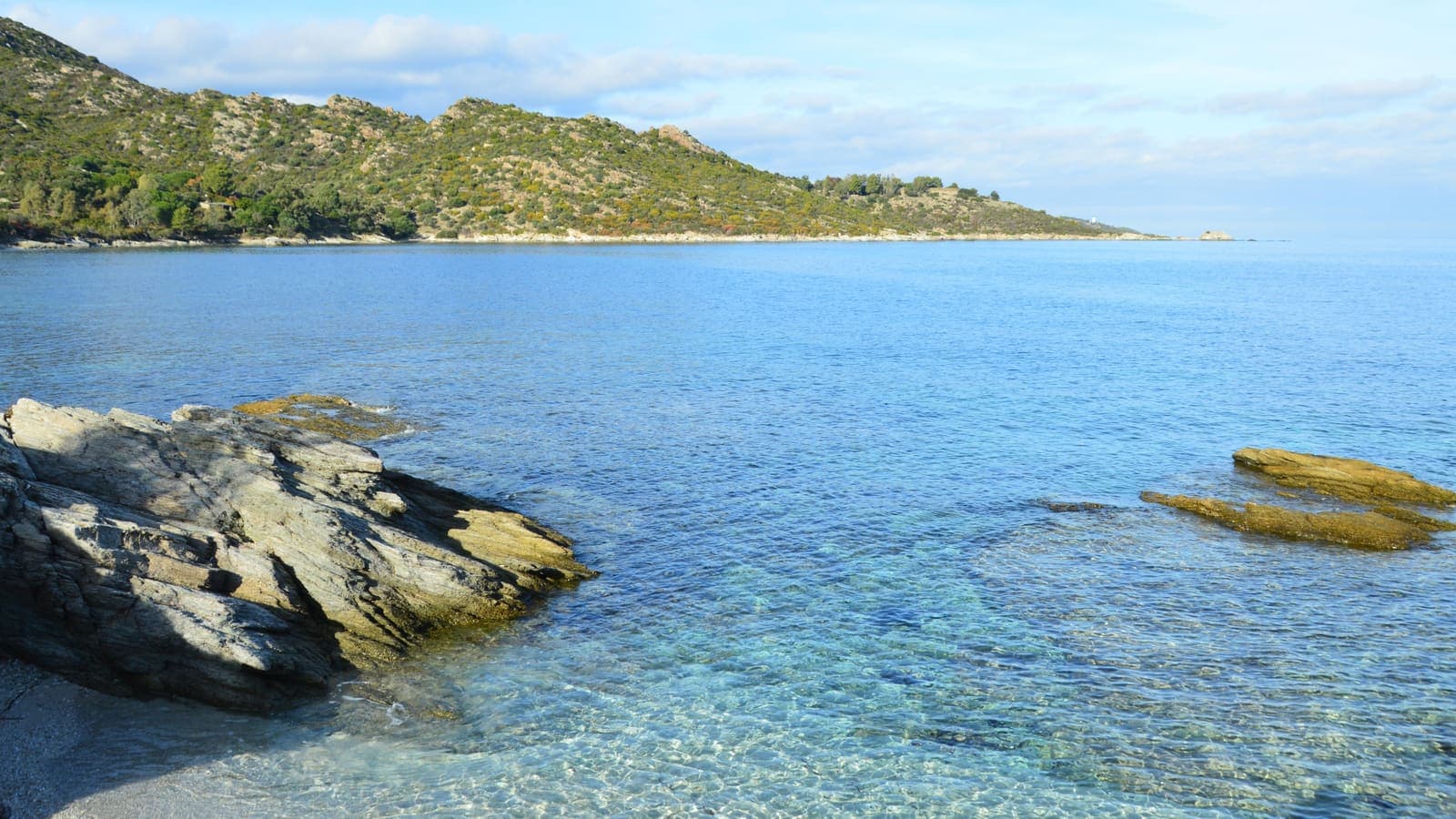
A rocky cove and clear water on the Mediterranean coast (illustrative image)

What We Offer

01

Location & Concept Consulting

We offer market-informed recommendations for the concept and location that fit your target audience.

02

Feasibility & Return Analysis

We build a realistic feasibility model based on investment cost, operating expenses and expected occupancy.

03

Licensing & Permit Process

We guide you through official processes such as the tourism operation certificate and business license.

04

Gastronomy Tourism Consulting

We develop concepts and partnership ideas that let your venture reflect the value of Antakya's culinary heritage.

05

Suitable Property Sourcing

We research properties that can be converted into a hotel, restaurant or hospitality venture.

06

International Marketing Links

Through the Burç Consulting network, we connect you to international promotion and partnership opportunities.

Setup cost estimator

See an illustrative cost range for your restaurant or hotel concept based on size and tier.

90 m²
Concept tier

Estimated total setup cost

$31,710 – $66,725
Renovation / build-out$19,800–40,500
Equipment & furnishing$8,910–18,225
Permits & licensing$3,000–8,000

These figures are an illustrative planning estimate; they exclude rental deposit and working capital. Actual costs vary by location, building condition and supplier; get a free consultation for a budget specific to you.

What we assess before a tourism investment

  • Clarity on the tourism operation certificate and business-license requirements for the area
  • Building seasonality realistically into your revenue projections
  • How post-earthquake infrastructure and transport conditions affect the venue's location
  • Structural condition and seismic-code compliance for any existing building
  • Access to a reliable local supply chain, especially for gastronomy ventures
  • How long-term zoning plans could affect the area's tourism potential

From the official data

Tourism: Pre-Earthquake Baseline and the Development Agency's 2025 Records

According to the Hatay Provincial Tourism Strategy and Action Plan of the Eastern Mediterranean Development Agency (DOĞAKA), Hatay had 45 tourism-licensed accommodation facilities, 2,273 rooms and 4,602 beds in 2016 data. These figures describe the situation before the 2023 earthquake; current facility and bed numbers are not in these sources. The agency's 2025 activity report records current tourism projects (Antakya Gastronomy Market, Madenli Yacht Harbour, Hatay Surf Centre).

IndicatorValueYearSource
Tourism-licensed accommodation facilities452016[1]
Rooms · beds2,273 · 4,6022016[1]
Rooms · beds in Antakya (subtotal)754 · 1,5222016[1]
Tourism-licensed food-and-beverage facilities · travel agencies10 · 862016[1]
Average annual tourists (entries to licensed facilities)223,3042009–2015[1]
Average nights · average occupancy (DOĞAKA calculation)1.9 · 34.4%2009–2015[1]
Antakya Gastronomy Market: opened · daily visitors · businesses27.09.2024 · about 3,000 · 152024–2025[2]
Hatay Surf Centre (2025 CMDP): completion targetApril 20262025[2]

What does this data mean for an investor?

About 33% of the pre-earthquake capacity (1,522 beds) was in Antakya's centre. The present state of this capacity cannot be read from these sources; without the Ministry of Culture and Tourism's current licensed-facility data no accommodation supply figure can be given. By DOĞAKA's calculation, average occupancy in licensed facilities during 2009–2015 was 34.4% with 1.9 nights on average: pre-earthquake demand used only a small part of existing bed capacity. The agency read this as roughly two thirds of accommodation capacity going unused.

What it means for an investor: for a new hotel or boutique-lodging decision, the first question should not be “are beds missing?” but “where will occupied beds come from?”; low pre-earthquake occupancy shows the demand side (visitor numbers, length of stay) matters more than the structure. As current demand indicators, Hatay Airport passenger data (the air-traffic block on this page), new visitor-drawing sites such as the Gastronomy Market and the museum's reopening timetable should be followed together (interpretation).

Limitation: Accommodation and visitor figures refer to 2016 and 2009–2015; they rest on Hatay Provincial Directorate of Culture and Tourism data in the DOĞAKA plan and do not reflect the 2023 earthquake. The plan's “occupancy” is a rough ratio of annual tourist numbers to bed capacity, not true room occupancy. The plan's visitor and revenue projections for 2023 should be assumed not to have materialised and are not used as reference. The 2025 items are project statuses from the development agency's activity report; visitor numbers (Gastronomy Market) are the agency's statement.

Hatay Airport: Passenger and Cargo Traffic

According to DHMİ data, Hatay Airport served 288,706 passengers in 2024 and 506,499 in 2025 (+75.4%). In the first eight months of 2026 (provisional data) passenger numbers reached 729,935, +237.3% on the 216,390 of the same period in 2025.

IndicatorValueYearSource
Passengers (domestic + international)288,7062024[1]
Passengers: total · domestic · international506,499 · 478,185 · 28,3142025[1]
Passengers, January–August216,3902025[1]
Passengers, January–August: total · domestic · international (provisional)729,935 · 634,067 · 95,8682026[1]
Aircraft movements2,509 → 3,9072024 → 2025[1]
Aircraft movements, January–August1,882 → 4,8322025 → 2026[1]
Load (baggage + cargo + mail, tonnes)2,701.5 → 5,082.72024 → 2025[1]
Of which cargo (tonnes)19.0 → 48.72024 → 2025[1]

What does this data mean for an investor?

Passengers in the first eight months of 2026 equal 144% of all of 2025: the airport passed the previous year's total in under a year. International passengers were zero at the end of August 2025, 5,245 by the end of September and 28,314 at year-end; in 2026 they reached 95,868 in eight months. The cumulative figures for July and August 2025 are identical (216,390): there are no recorded passengers in August 2025. DHMİ's table does not give the reason; the programme contains runway and apron repair items (TRY 16 billion, 2023–2026), but no causal link between the two is drawn here.

The load item (5,082.7 tonnes) combines baggage, cargo and mail; in 2025 only 48.7 tonnes of it were cargo (1.0%). The airport is thus passenger-driven today; for air-cargo investments (cold chain, e-commerce distribution) current volumes are very low and demand cannot be inferred from these data.

What it means for an investor: the rapid recovery in passenger numbers points to demand being rebuilt for tourism and business-travel services such as hotels, restaurants, car rental and transfers (interpretation). But the data do not say whether passengers are tourists, business travellers or visitors, or how many nights they stay; accommodation investments need a separate demand study.

Limitation: The 2026 figures are DHMİ's “provisional” data and may change. Passenger numbers count arrivals plus departures (one traveller counts twice). Purpose of visit, length of stay and spending are not in this source. No comparison with 2023 or earlier (pre-earthquake) is made here.

Cultural Heritage Restoration: Public Investment

In the 2026 Investment Programme, culture has the highest project count of any sector: 43 projects (TRY 10.8 billion). Phases 2 and 3 of the Hatay Museum repair (TRY 1.75 billion and TRY 2.50 billion) and the restoration of the Antakya Grand Mosque and Ahmediye Mosque are in the programme.

IndicatorValueYearSource
Hatay Museum repair, phase 2 (2024–2027; spent: TRY 871.4 million)TRY 1.75 billion2026[1]
Hatay Museum repair, phase 3 (2025–2028)TRY 2.50 billion2026[1]
Antakya Grand Mosque restoration (protocol)TRY 120 million2026[1]
Antakya Ahmediye Mosque restorationTRY 52.4 million2026[1]
Culture sector total43 · TRY 10.8 billion2026[1]

What does this data mean for an investor?

The museum's two phases together cost TRY 4.25 billion, which is 39% of the culture sector's value: a large share of the programme's cultural investment goes to a single museum, while the rest of the 43 projects are smaller restorations of mosques, a municipality building and other registered buildings.

What it means for an investor: the reopening timetable of the historic core (museum, grand mosque, bazaar surroundings) is the most concrete public indicator of the visitor potential for tourism investments such as boutique hotels, restaurants and experience centres. Visitor numbers, occupancy and accommodation supply are not in this source; without them no numerical claim about the size of demand can be made.

Limitation: The source covers public restoration investment only; for tourist numbers, accommodation facilities, beds and occupancy the Ministry of Culture and Tourism statistics should be checked separately. Completion years are programme projections.

Figures come from official sources; interpretations are Invest Hatay's own and are not investment advice.

Common questions on tourism investment

It varies significantly by location, room count and concept. Once we understand your goals, we prepare a tailored feasibility draft for you.

Let's shape your tourism investment idea together

Whether it's a boutique hotel or a restaurant concept, let's plan the first step together.