Skip to content
Invest HatayInvest Hatayby Burç Consulting

Post-Earthquake Investment Opportunities

Careful evaluation of land, housing and commercial opportunities in Hatay's reconstruction, for investors who are willing to move early.

Reconstruction is an opportunity, when read correctly

Since the February 6, 2023 earthquakes, Hatay has been undergoing one of Türkiye's most extensive urban transformation efforts, driven by both TOKİ and private-sector partnerships. According to Türkiye's Ministry of Environment, Urbanization and Climate Change, 153,755 homes and workplaces had been completed in Hatay by the end of 2025. That means a shift in real estate value, both residential and commercial, that will play out over the coming years.

Investors who move early can secure a favorable position in areas where pricing hasn't yet settled, zoning plans are becoming clear, and infrastructure is being rebuilt. But this window of opportunity also demands careful due diligence.

We help you make decisions based on concrete data: zoning status, title deed records, soil surveys and seismic-code compliance, rather than emotion or speculation. We never recommend an opportunity we see as risky.

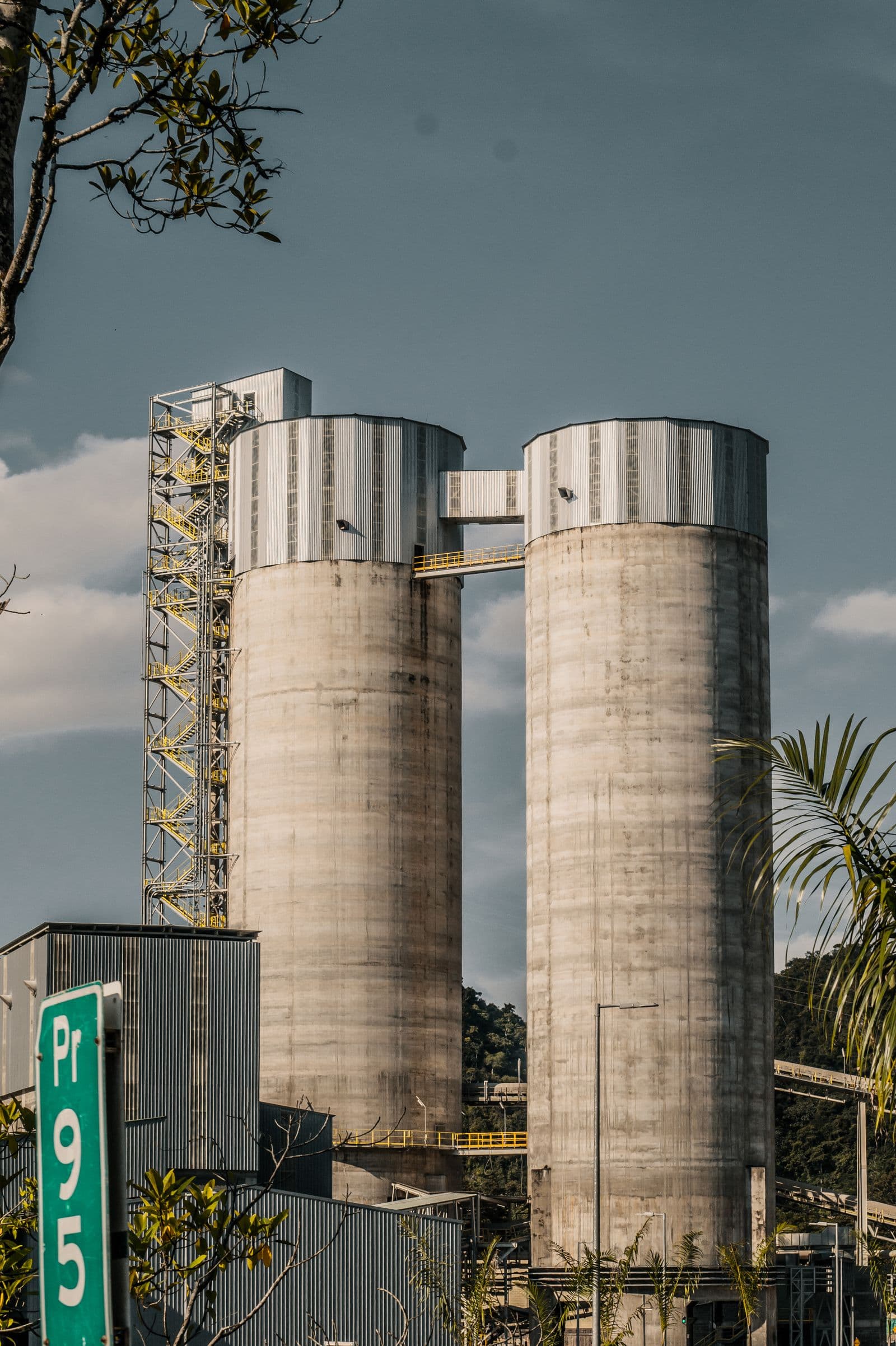
Concrete plant silos (illustrative image)

What We Offer

End-to-end support, from opportunity screening to decision.

01

Land & Parcel Screening

We screen current opportunities in the region against criteria matched to your goals.

02

Zoning Status Analysis

We review each parcel's current zoning plan, urban-transformation status and restrictions.

03

Soil & Risk Assessment

We independently review available soil-survey reports and share the risks with you plainly.

04

Price & Value Comparison

We provide a realistic valuation benchmarked against comparable sales in the area.

05

Investment Timing Guidance

We advise on where and when moving is more advantageous.

06

Official Process Follow-Up

We follow up on your behalf with the land registry, municipality and, where relevant, TOKİ.

What we check before recommending an opportunity

  • Whether the title deed record is consistent pre- and post-earthquake
  • A cautious, transparent approach in areas where the zoning plan isn't finalized yet
  • Whether existing soil-survey reports are current and independently verifiable
  • Building permit status and compliance with the current seismic code on new construction
  • Extra diligence on parcels that could be subject to expropriation or land consolidation
  • Clarity on entitlement rights and process status within urban-transformation zones

From the official data

Population and Age Structure: Hatay in the Official Records

According to TurkStat's address-based registers, Hatay's population was 1,544,640 on 31 December 2023, 1,562,185 in 2024 and 1,577,531 in 2025. The annual growth rate was −87.6 per mille in 2023 and rose to 10 per mille in 2024–2025, against a national average of 5 per mille.

IndicatorValueYearSource
Population1,577,5312025[1]
Population1,562,1852024[1]
Population1,544,6402023[2]
Annual growth rate, 2024–2025 (Türkiye: 4.97‰)9.78‰2025[1]
Annual growth rate, 2022–2023 (Türkiye: 1.1‰)−87.6‰2023[2]
Population density (persons/km²; 2022: 289)2652023[2]
Age structure: 0–14 / 15–64 / 65+ (Türkiye: 21.4% / 68.3% / 10.2%)25.62% / 65.89% / 8.47%2023[2]
Share of Türkiye's population1.83%2025[1]

What does this data mean for an investor?

The two-year increase totals 32,891 people (2.13%), so registered population has started to rise again after the 2023 fall. Density, however, dropped from 289 in 2022 to 265 in 2023, and the 2025 population is only 2.1% above 2023, which suggests registered population has not yet returned to its pre-earthquake level (this last point is an inference from the data).

The age structure is younger than the national average: 25.62% aged 0–14 (Türkiye 21.4%) and 8.47% aged 65+ (Türkiye 10.2%). Over the medium term this points to household formation and demand for education and health services, but the age data are from 2023 and may not fully reflect post-earthquake migration.

What it means for an investor: the population recovery is the base for housing, retail and service demand, but the increase is uneven across districts. The target district's own figures matter more than the provincial average.

Limitation: The registration system counts address-registered residents. People in temporary housing, those living elsewhere but registered in Hatay, or households that have not updated their address can make the figure differ from the resident population. Age structure and density are 2023 data.

Building Permits and Occupancy Permits: A Signal of New Housing Supply

According to TurkStat, dwellings with a building permit in Hatay numbered 8,064 in 2022, 3,970 in 2023, 34,671 in 2024 and 68,990 in 2025. Dwellings with an occupancy permit over the same years were 10,095, 1,600, 8,457, 24,476.

IndicatorValueYearSource
Dwellings with building permit8,0642022[1]
Dwellings with building permit3,9702023[1]
Dwellings with building permit34,6712024[1]
Dwellings with building permit68,9902025[1]
Dwellings with occupancy permit10,0952022[1]
Dwellings with occupancy permit1,6002023[1]
Dwellings with occupancy permit8,4572024[1]
Dwellings with occupancy permit24,4762025[1]
Hatay's share of national permits5.8%2025[1]

What does this data mean for an investor?

Hatay's share of national permitted dwellings in 2025 is 5.8%, and its share of occupancy permits 3.5%, while it holds 1.8% of Türkiye's population. Its permit share is therefore about 3.2 times its population share: construction activity is disproportionately intense.

In 2024–2025, 103,661 dwellings received permits against 32,933 that received occupancy permits, a ratio of about 3.1 to one. This suggests that a large share of permitted homes had not yet received occupancy by the end of 2025, i.e. may still be under construction. The two flows are not an exact stock difference (permit-to-occupancy can take years, and some permits are renewed or cancelled), so this is a directional signal, not a stock calculation.

What it means for an investor: homes receiving occupancy over the coming years can affect first-hand sales and rental supply. Before buying, the permit and occupancy status and the construction stage of a specific project should be verified separately in the official records.

Limitation: From Q2 2025 TurkStat widened coverage beyond municipalities to all authorities entitled to issue building documents, so the 2025 figure is not fully comparable with earlier years and the effect of the change in Hatay cannot be separated from the table. 2024–2025 data have been revised. Unpermitted buildings are out of scope; the data count dwellings, not quality or price.

Earthquake Housing: Official Delivery Figures

According to statements by the Ministry of Environment, Urbanisation and Climate Change and TOKİ, the final ceremony on 27 December 2025 completed 455,357 independent units across the 11 earthquake-region provinces, of which 153,755 are in Hatay. At the final ceremony in Hatay, 55,681 independent units were drawn by lot.

IndicatorValueYearSource
Homes and workplaces built in Hatay (independent units)153,7552025[1]
Drawn by lot at the 27 December 2025 ceremony in Hatay55,6812025[2]
Earthquake-region total (11 provinces)455,3572025[1]
Within the total: housing · village houses · workplaces367,995 · 65,672 · 21,6902025[1]
Hatay's share of the regional total33.8%2025[1]
Next after Hatay: Malatya · Kahramanmaraş79,660 · 73,9562025[1]

What does this data mean for an investor?

Hatay holds about a third (33.8%) of the independent units built in the region, or roughly 9.7 units per 100 registered residents (1,577,531). For comparison, TurkStat's occupancy-permit statistics show 32,933 dwellings for Hatay in 2024–2025; the two figures do not use the same measure and TurkStat's coverage widened from Q2 2025, so they should not be divided by one another, and the sources do not say how much of these deliveries the TurkStat figure includes.

What it means for an investor: these units were produced to be delivered to entitled owners, so a large part of the newly built stock does not enter the ordinary sale-and-purchase market directly (interpretation). The conditions for later sale or rental of delivered homes must be verified separately in the relevant legislation and title records; these figures do not show an effect on prices or rents.

Limitation: The figures rest on the institutions' press statements (they are not an audited statistical series). No split into homes and workplaces is given for Hatay; the split into 367,995 housing units, 65,672 village houses and 21,690 workplaces applies only to the regional total. Whether each unit has been taken over, and its occupancy status, is not shown.

Public Investment Programme: Where the State Is Investing in Hatay

The 2026 Investment Programme published by the Hatay Governorship lists 132 projects for Hatay, with a total project cost of TRY 335.2 billion and a 2026 allocation of TRY 37.4 billion. The 2025 programme had 146 projects, TRY 261.8 billion in total cost and TRY 32.8 billion in allocation. Amounts are nominal lira.

IndicatorValueYearSource
Transport & communications (21 projects)TRY 167.5 billion · 50.0%2026[1]
Agriculture (incl. dams, irrigation, flood control) (10 projects)TRY 95.6 billion · 28.5%2026[1]
Other public services (26 projects)TRY 33.0 billion · 9.9%2026[1]
Health (8 projects)TRY 23.0 billion · 6.9%2026[1]
Culture (43 projects)TRY 10.8 billion · 3.2%2026[1]
Education (23 projects)TRY 4.3 billion · 1.3%2026[1]
Energy (1 projects)TRY 1.0 billion · 0.3%2026[1]

What does this data mean for an investor?

About half of the programme (50.0%) goes to transport and 28.5% to agriculture (mostly dams, irrigation and flood control). Health takes 6.9%, education 1.3% and energy 0.3%. The 2026 allocation is 11.2% of total cost, so most projects are multi-year, with completion spread over 2027–2030.

What it means for an investor: the public programme shows the access and infrastructure base for private investment. The transport weight matters for logistics and trade, irrigation and dams for agricultural production and processing, and hospital and university projects for health, education and housing demand. A project's inclusion in the programme does not guarantee its completion date.

Limitation: The programme excludes 15 projects shared with other provinces (TRY 57.8 billion). Project cost is multi-year and nominal; it is not annual spending or an execution rate. Because culture and tourism were grouped as one sector in 2025 (“Culture-Tourism”) and as “Culture” in 2026, no sector-level year-on-year comparison is made.

House Price and Rent Index: The Hatay Region

According to the CBRT's August 2026 bulletin, in the TR63 region covering Hatay, Kahramanmaraş and Osmaniye the house price index rose 22.1% in nominal terms on the same month a year earlier (Türkiye: 23.0%). The new-tenant rent index rose 26.4% in the same region (Türkiye: 26.4%).

IndicatorValueYearSource
House price index, annual nominal change: TR63 (Hatay, K.Maraş, Osmaniye)22.1%August 2026[1]
House price index: Türkiye · İstanbul · Ankara · İzmir23.0% · 26.3% · 24.8% · 23.3%August 2026[1]
House price index: lowest · highest region13.0% · 27.0%August 2026[1]
New-tenant rent index, annual nominal change: TR6326.4%August 2026[1]
New-tenant rent index: Türkiye · İstanbul · Ankara · İzmir26.4% · 34.5% · 28.3% · 25.5%August 2026[1]
Türkiye house price, annual real change (CPI-adjusted)−6.5%August 2026[1]

What does this data mean for an investor?

The TR63 region's house price rise (22.1%) is 0.9 points below the national average and mid-table among the 20 regions (lowest 13.0%, highest 27.0%). Prices around Hatay are therefore rising more slowly than in metropolises such as İstanbul (26.3%). The rent index rose 26.4%, 4.3 points more than the price index, which may point to a rising rent-to-price ratio (interpretation, since indices show change, not level).

Nationally, the price rise corresponds to a 6.5% real decline: the nominal rise stayed below inflation. The bulletin gives no regional real change for TR63, but since its nominal rise (22.1%) is below the national one, the real loss there may be larger (interpretation). What it means for an investor: a plan that treats housing as a store of value should look at this indicator together with rental yield; a nominal rise alone is not evidence of return.

Limitation: The indices refer to the Hatay–Kahramanmaraş–Osmaniye region (TR63), not to Hatay alone; no Hatay-only value is published. The indices (2023=100) give neither a price per m² nor a rent amount, only change. By the CBRT's method, house values come from valuation reports prepared for loan applications (a completed sale is not required) and quality effects are removed by hedonic regression. The bulletin address is updated each month; the August 2026 issue is used here.

Post-Earthquake Production and Debris Management: Development Agency Records

DOĞAKA's 2025 Activity Report records that a 1,125 m² common production facility was built for the Antakya Tanners' Estate destroyed in the earthquake, that Hatay YİKOB's earthquake-debris processing project was contracted under the 2025 CMDP, and that the private-sector Green Transformation Technical Support Programme received 8 applications (6 successful).

IndicatorValueYearSource
Antakya Tanners' Estate: common-use facility (m²)1,1252025[1]
Leather Common Production Facility: statusLicence done; transfer approved; electricity connection pending2025[1]
Processing Earthquake Debris with Zero-Waste Awareness (YİKOB, 2025 CMDP)Contract signed; tender preparations under way2025[1]
Green Transformation Technical Support Programme: applications · successful8 · 62025[1]
Furniture-sector development axes support programmeNot implemented; removed from the 2026 programme2025[1]

What does this data mean for an investor?

The records show post-earthquake recovery moving at two speeds: a common facility for small-trade production has been built and is nearly ready (electricity connection pending), while debris recycling is still before tender. Debris processing shows the public side starting the process for a demolition-waste recycling investment; but debris volume, plant capacity and revenue model (gate fees, secondary-product sales) are not in this source (interpretation). The furniture support programme not being implemented suggests not relying on a ready support channel in that sector.

Limitation: The source is the development agency's own activity statement; project statuses relate to the period of the report and may have changed. It contains no amount, capacity or debris-volume data.

Figures come from official sources; interpretations are Invest Hatay's own and are not investment advice.

Common questions on post-earthquake investment

It varies significantly by area and zoning status. Areas with completed reconstruction and refreshed infrastructure are seeing value gains, while pricing in areas with unresolved zoning remains volatile, so we assess every opportunity on its own data rather than quoting a general figure.

Let's review current opportunities together

We'll filter current opportunities in the region against your goals and prepare a shortlist for you.