Skip to content
Invest HatayInvest Hatayby Burç Consulting

Agriculture & Agro-Industry Investments

One of Türkiye's most productive olive and citrus growing regions, Hatay offers agro-industry opportunities spanning production, processing, cold chain and export.

Why Invest in Agriculture in Hatay?

As of 2023, TÜİK data ranks Hatay 3rd in Türkiye for olive production at 178,933 tons and 5th for olive tree count at 14.2 million trees. Hatay Governorate specifically highlights red meat, boutique olive oil, frozen food, medicinal aromatic plants and fresh produce exports on its 2026 investment agenda.

While production is strong, processing, packaging and cold-chain infrastructure haven't yet reached saturation in the region, creating a low-competition opportunity for processing facilities positioned close to raw material sources.

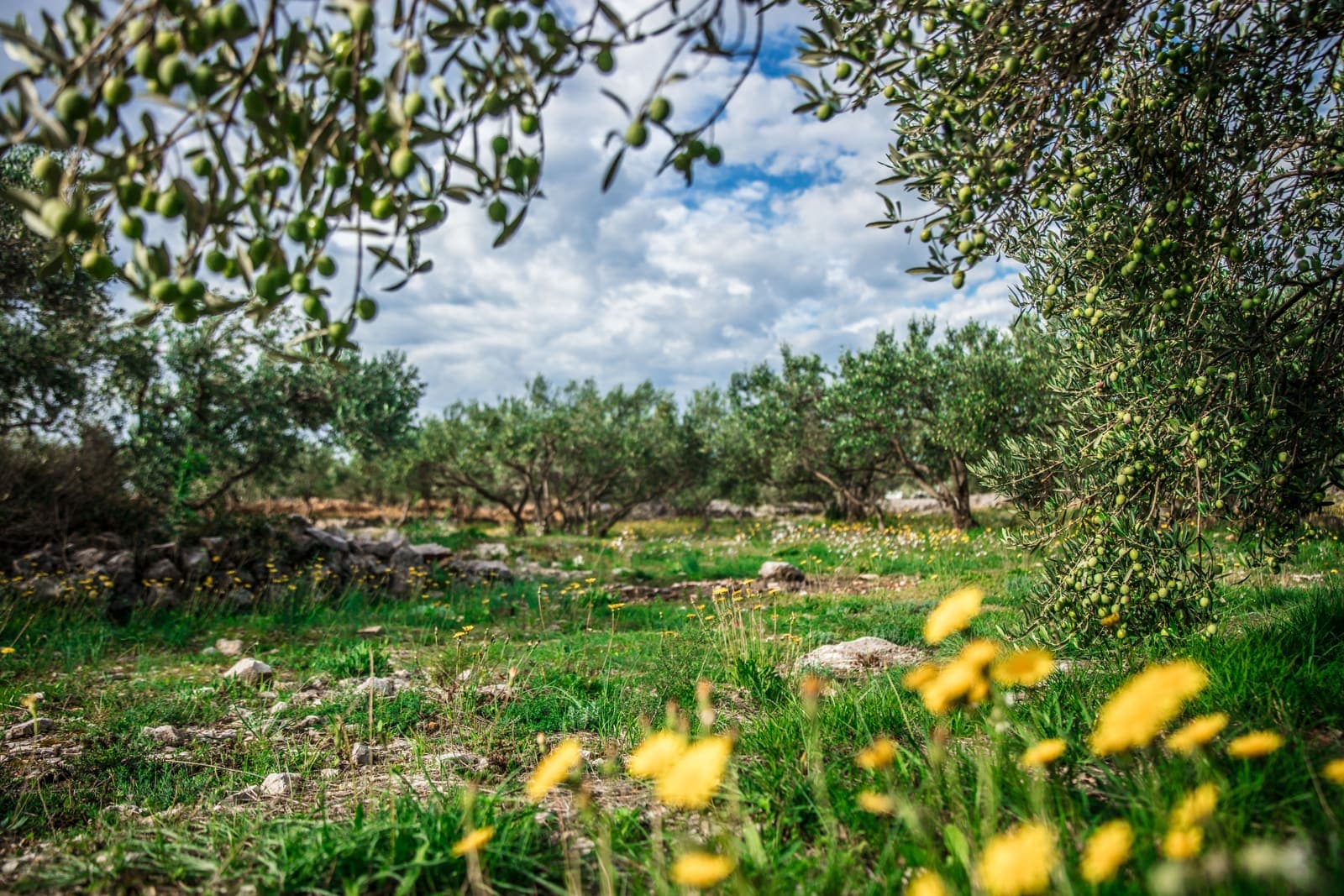
Land planted with olive trees (illustrative image)

Investable Sub-Types

The main investment types worth considering in agriculture and agro-industry.

Olive oil plant
Olive processing
Citrus processing
Fruit and vegetable processing
Frozen food facility
Cold storage
Packaging facility
Agricultural logistics
Greenhouse farming
Modern agriculture
Medicinal aromatic plant production
Livestock
Meat and meat products facility
Aquaculture
Agricultural technology
Food export center

Where Can You Invest?

Districts that stand out for agriculture and agro-industry investment.

Altınözü and Kırıkhan

Districts with concentrated olive production, suited to olive oil plants and processing facilities.

Dörtyol

The center of citrus production, well-suited to fruit/vegetable processing and packaging facilities.

Reyhanlı and Kumlu

Strategic locations for agricultural export logistics, given their proximity to border trade.

Samandağ

A coastal area suited to aquaculture and seafood processing facilities.

Investment Models

Different ways to bring your agriculture or agro-industry investment to life.

01

Direct Land/Facility Purchase

Buying agricultural land or a processing facility to start production directly.

02

Contract Production Partnership

Reducing raw material risk by setting up a contract supply agreement with local producers.

03

Joint Venture (JV)

Partnering with a local cooperative or producer union to leverage market knowledge.

04

Lease / Takeover

Leasing an existing processing facility or taking over its operation to reach production faster.

Licensing & Permit Process

The core steps to complete before setting up an agriculture/agro-industry facility.

  • Business registration certificate from the Provincial Directorate of Agriculture and Forestry
  • Food registry and production permit for food processing facilities
  • Land designation and zoning check (agricultural/pasture/field)
  • Confirmation of irrigation water access rights
  • Environmental compliance certificate (wastewater, by processing facility type)
  • Required certifications for export (organic, geographical indication, etc.)

Incentives & Support

Region 6 incentives apply to agricultural processing facilities too; the Ministry of Agriculture and Forestry's rural development supports and grant programs like IPARD offer additional opportunities specific to agricultural processing investments.

Local Stakeholders

The main institutions you'll be in contact with during the process.

Hatay Provincial Directorate of Agriculture and Forestry
Olive and citrus producer unions
Local cooperatives
Hatay Commodity Exchange
İskenderun Port export units
Food safety inspection bodies

Our Feasibility Approach

The feasibility of an agriculture/agro-industry investment rests on data like raw material supply and seasonality in the region, processing capacity against raw material sourcing cost, domestic and export demand, and required cold-chain/logistics infrastructure.

Our feasibility work gathers this data for your product group, whether olives, citrus, meat or seafood, and turns it into a concrete investment plan.

From the official data

Crop Production: Olives, Citrus and Field Crops

According to the Hatay Provincial Directorate of Agriculture and Forestry's 2025 Activity Report, in 2024 the province produced field crops on 1,249,909 decares (1,430,054 tonnes), fruit on 1,021,435 decares (1,380,202 tonnes; 27,067,712 fruit-bearing trees) and vegetables on 240,618 decares (601,750 tonnes).

IndicatorValueYearSource
Oil olives (area · output)450,224 decares · 167,710 tonnes2024[1]
Table olives (area · output)122,046 decares · 55,715 tonnes2024[1]
All olives (oil + table): area · trees572,270 decares · 14,323,8572024[1]
Mandarin (Satsuma)131,217 decares · 337,581 tonnes2024[1]
Orange (Washington)60,458 decares · 234,850 tonnes2024[1]
Lemon and lime36,954 decares · 128,713 tonnes2024[1]
Citrus total (five items in the report)308,452 decares · 938,976 tonnes2024[1]
Wheat (other) · Seed cotton · Maize (area)521,106 decares · 342,044 decares · 153,880 decares2024[1]
Dry onion · Potato (output)155,329 tonnes · 154,584 tonnes2024[1]

What does this data mean for an investor?

Fruit area (1,021,435 da) is about 4.2 times vegetable area, and fruit output is on the same scale as field crops (1,380,202 tonnes and 1,430,054 tonnes). Farming is centred on multi-year tree crops: olives alone cover 572,270 decares and 14,323,857 trees, while citrus stands out with 308,452 decares and 938,976 tonnes. Output per decare is 2.57 tonnes for Satsuma mandarin and 0.37 tonnes for oil olives (as fruit).

What it means for an investor: these volumes show the size of the local raw-material base for olive oil, citrus processing, cold storage and packing plants. But existing processing capacity, prices and export data are not in this source, so a “capacity gap” cannot be concluded from it; a feasibility study should count existing plant capacity in the region separately.

Limitation: Figures refer to the 2024 production year and come from tables in the provincial directorate's activity report; in the fruit table only the main crops have their own rows (an “other” line also exists). Olive figures are fruit tonnage, not olive-oil volume. 1 decare = 0.1 hectare. Any post-earthquake yield effect cannot be separated from this table.

Dam, Irrigation and Flood-Control Investments

In the 2026 Investment Programme, agriculture is the second-largest item with 10 projects and TRY 95.6 billion. Amik-Afrin (Reyhanlı Dam and Irrigation) covers 58,516 ha of irrigation and 480 hm³ of storage.

IndicatorValueYearSource
Amik-Afrin (Reyhanlı Dam and Irrigation): irrigation 58,516 ha, flood 20,000 haTRY 31.7 billion · 1995–20302026[1]
Tahtaköprü Dam heightening and irrigation: irrigation 33,490 haTRY 17.5 billion · 2016–20302026[1]
Büyük Karaçay irrigation (3,554 ha) and Gönençay irrigation (4,468 ha)Irrigation area2026[1]
Hatay Earthquake-Resilient Cities (flood protection; channel improvement 14.6 km)TRY 38.0 billion · 2024–20282026[1]

What does this data mean for an investor?

The four listed irrigation projects together cover 100,028 ha. Amik-Afrin started in 1995 and runs to 2030; TRY 9.9 billion (31%) had been spent by the end of 2025. Water infrastructure is therefore a long-horizon investment whose completion date can slip.

What it means for an investor: growth in irrigable area is a main determinant of water access for farmland and greenhouse investments; whether a given parcel falls inside these project areas should be checked separately in the State Hydraulic Works (DSİ) records. Programme amounts do not guarantee when irrigation will enter service.

Limitation: Irrigation hectares are project scope, not the irrigated area in operation today, and the four-project sum should not be added to current irrigated land because areas may overlap. Amounts are nominal lira.

Livestock Holdings and Number of Farms

According to the Provincial Directorate of Agriculture and Forestry's 2025 records, Hatay has 142,829 cattle, 339,842 sheep, 144,335 goats, 1,036,867 poultry and 132,429 active beehives, across 16,177 registered livestock holdings.

IndicatorValueYearSource
Cattle142,8292025[1]
Sheep · Goats339,842 · 144,3352025[1]
Poultry1,036,8672025[1]
Active beehives132,4292025[1]
Registered livestock holdings16,1772025[1]

What does this data mean for an investor?

Small ruminants (484,177) are about 3.4 times the number of cattle (142,829), and the average number of cattle, sheep and goats per holding is low (39 head per holding, excluding poultry and bees). Poultry number 1,036,867. This suggests that meat and dairy processing would draw raw material from many small holdings; slaughterhouse and processing capacity data are not in this source.

Limitation: Figures are administrative records (2025); meat, milk and egg output and price data are not part of this compilation. The per-holding average does not reflect how holdings are distributed by species.

Pages related to this data

Figures come from official sources; interpretations are Invest Hatay's own and are not investment advice.

Frequently asked questions about agricultural investment

Possible, subject to the reciprocity principle and land-size limits. We assess these conditions specifically for your investment.

Let's define your agricultural investment idea together

Tell us your product group, capacity target and market, and we'll map out a plan built for you.