
Skip to content
Invest HatayInvest Hatayby Burç Consulting

Why Should You Invest in Hatay?

Concrete reasons for anyone considering a restaurant, a hotel, a company branch, a home or land in Hatay: whoever you are, there's a case that fits.

Find the right investment for you

Two quick questions, and we'll show you which type of investment fits you best in Hatay.

What's your main goal in Hatay?

Why Open a Restaurant in Hatay?

Antakya is one of the few Turkish cities to hold UNESCO Creative City of Gastronomy status. With dishes like künefe, hummus, muhammara and oruk, it already carries international brand recognition, meaning a new restaurant concept here starts with built-in demand and name recognition.

The population returning as reconstruction progresses, including thousands of construction and public-sector workers, is driving daily demand for food service. Large chains haven't filled that gap yet, which makes it far easier right now to stand out with an authentic, contemporary concept in the right location.

  • The chance to build on an internationally recognized culinary culture
  • Rising daily population and demand in the rebuilding region
  • A low-competition market not yet saturated by major chains
See Tourism Investment Consulting
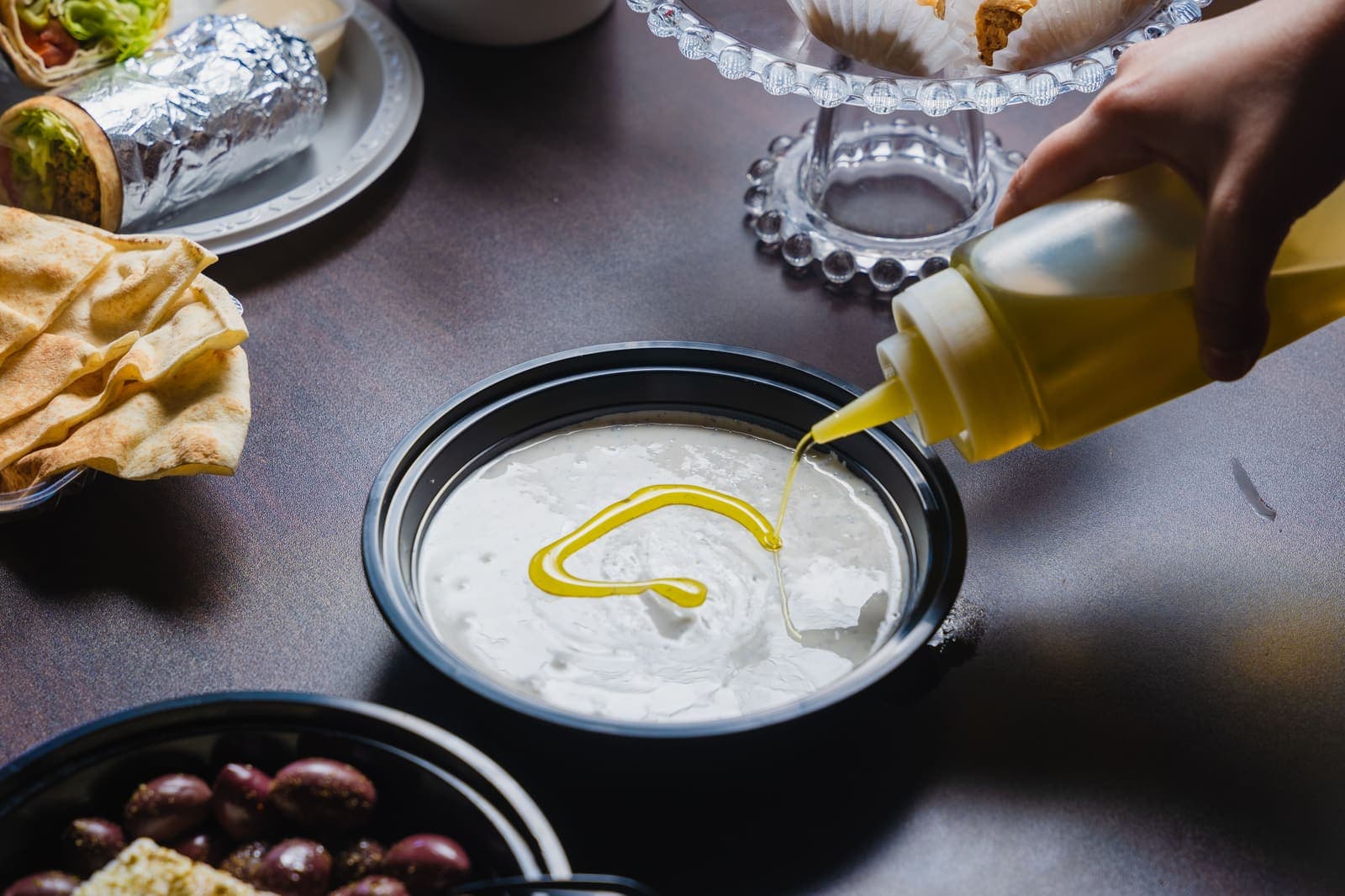
A Mediterranean-style spread (representative image)

Why Invest in a Hotel in Hatay?

The engineers, contractors and public officials working on reconstruction have already raised demand for accommodation capacity today, creating a real window of opportunity for boutique hospitality even before the region's longer-term tourism potential fully matures.

Samandağ's Mediterranean coastline and Antakya's historic center are two distinct areas with strong cultural and nature-tourism potential that major hotel chains haven't invested in yet. An early investor can capture both today's concrete demand and tomorrow's tourism growth at once.

  • Concrete, present-day accommodation demand driven by reconstruction
  • An unsaturated market along the Samandağ coast and central Antakya
  • Combined growth potential across culture, nature and gastronomy tourism
See Tourism Investment Consulting
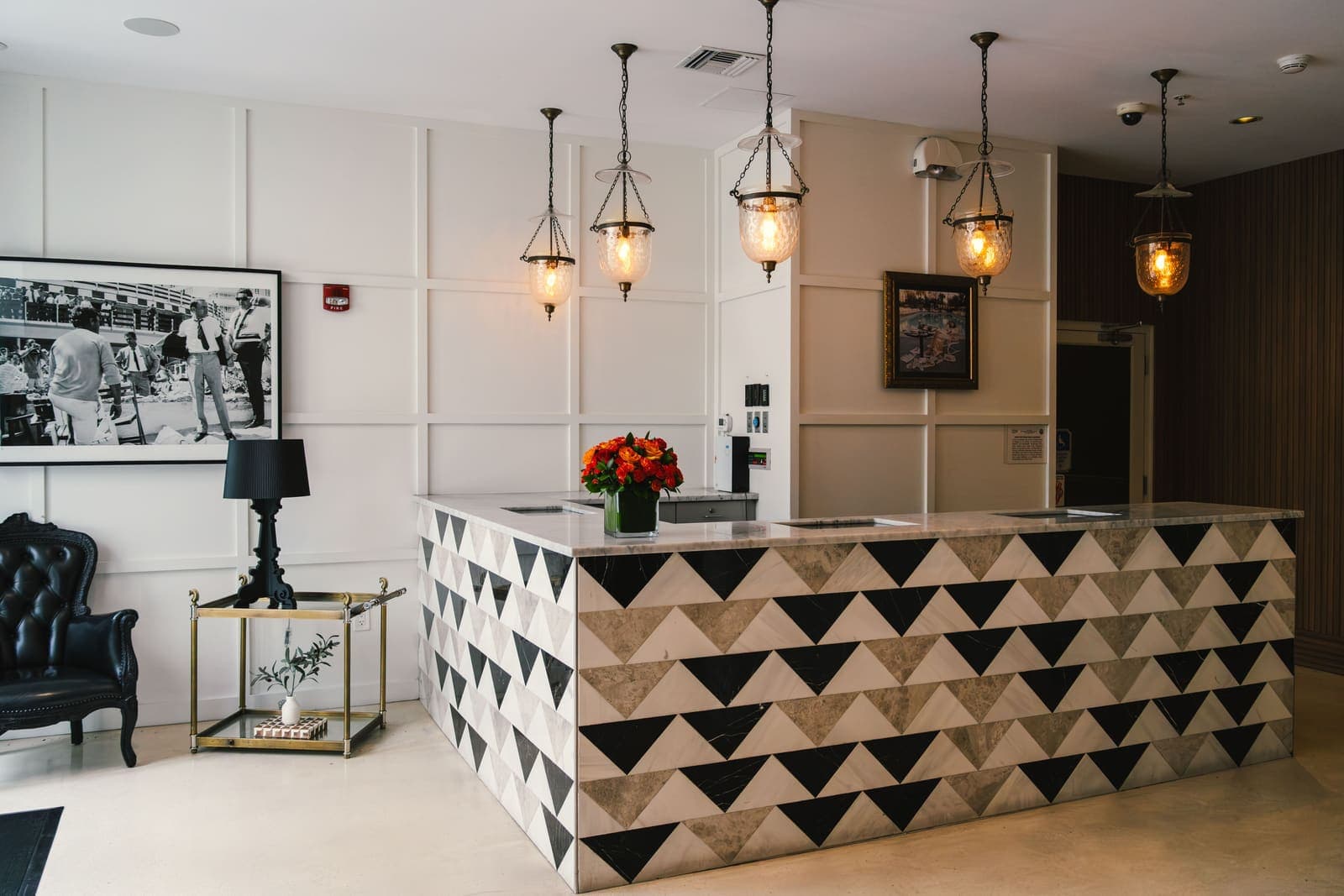
Boutique hotel interior (representative image)

Why Open a Branch in Hatay?

As hundreds of thousands of people move into new housing, a serious gap is opening up in retail, services and logistics. The first brands to enter these new neighborhoods have a real shot at building long-term customer loyalty.

With İskenderun Port, organized industrial zones and strong road connections, Hatay offers a strategic position that reaches beyond the local market into Eastern Mediterranean trade. Regional investment incentives also make opening a branch in the right sector financially attractive.

  • First-mover brand advantage in newly rebuilt residential areas
  • Strong logistics access via İskenderun Port and the OIZs
  • Access to regional investment incentives in eligible sectors
See Branch & Office Setup Consulting
A modern storefront (representative image)

Why Buy a Home in Hatay?

Newly built housing is inspected against the current seismic code and delivered with modern infrastructure: new roads, green space, social amenities, a meaningful jump in safety and comfort compared to older building stock.

Because the city is being replanned as a whole, a home bought today directly benefits from the infrastructure and urban-transformation investment that will complete over the next decade or more. For the Hatay diaspora abroad, this is a rare period where reconnecting with home and making a smart investment happen to align.

  • New building stock built to the current seismic code, with modern infrastructure
  • Long-term value-appreciation potential from the city's full replanning
  • A rare reinvestment window for the Hatay diaspora abroad
See Real Estate Investment Consulting
A modern residential building (representative image)

Why Buy Land in Hatay?

Hatay is one of Türkiye's most productive olive and citrus-growing regions. Olive land stands out as a measured, low-risk investment vehicle, offering both production income and long-term land value.

In areas where new zoning plans are becoming clear, some parcels also carry real potential to convert from agricultural to building land. A carefully vetted parcel can offer a dual opportunity: production income today, and value appreciation from a future zoning change.

  • Strong, proven agricultural productivity in olives and citrus
  • Agricultural export potential thanks to proximity to İskenderun Port
  • Conversion potential from agricultural to building land in some areas
See Post-Earthquake Investment Opportunities
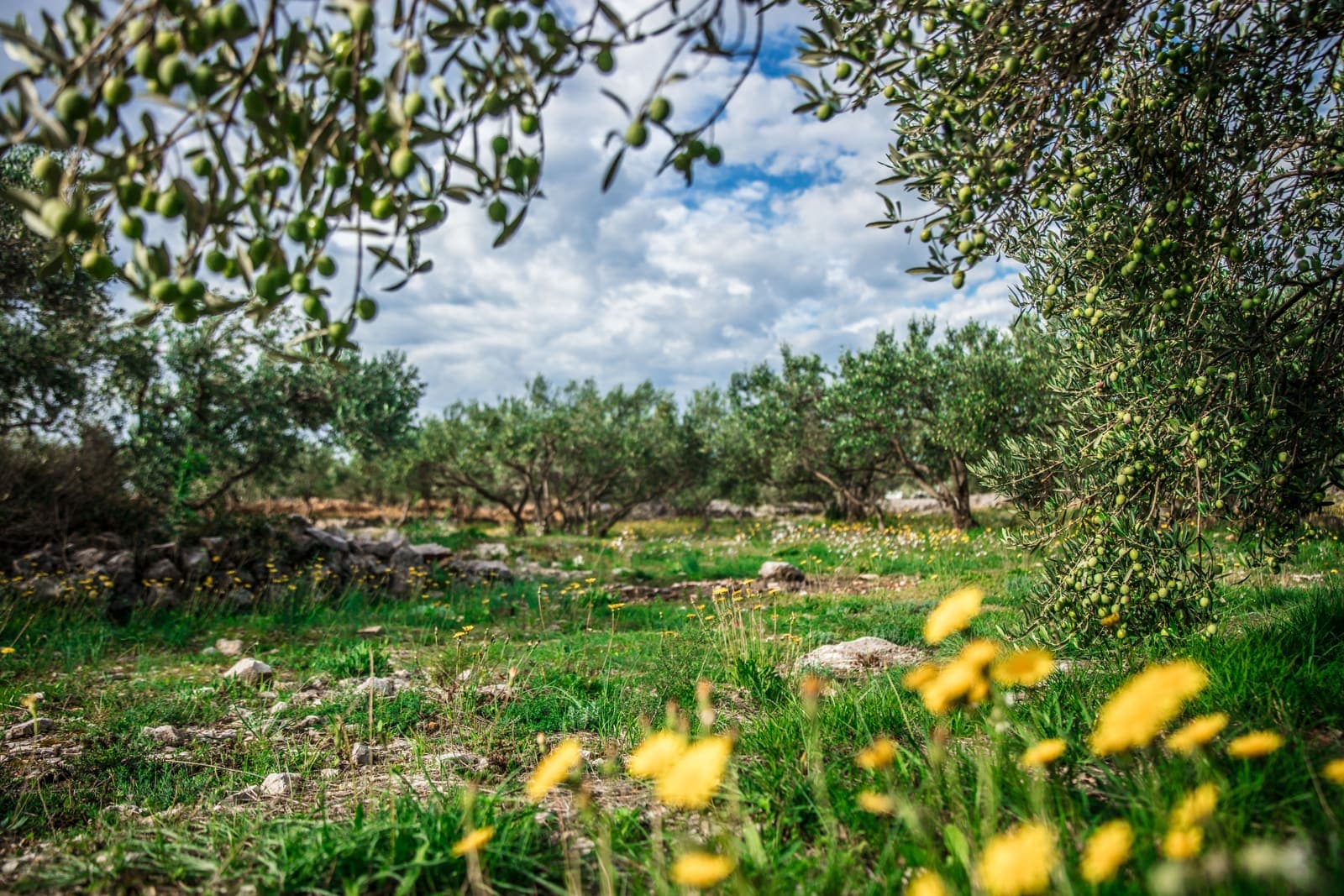
An olive grove (representative image)

Post-Earthquake Reconstruction Opportunities

Beyond individual investor profiles, four bigger facts are shaping Hatay's present.

Since the February 6, 2023 earthquakes, Hatay has been at the center of Türkiye's most extensive urban transformation effort. According to Türkiye's Ministry of Environment, Urbanization and Climate Change, 153,755 homes and workplaces had been completed in Hatay by the end of 2025; TOKİ-led mass housing projects are running in parallel with private-sector build-for-land-share agreements.

Hatay falls under Region 6, the top tier of Türkiye's regional investment incentive system. The employer's-share social security premium support for investors in earthquake-affected provinces was extended through December 31, 2028; longer than the standard duration elsewhere in Region 6. We detail how to access these incentives in our Investment Incentive Consulting service.

This reconstruction isn't limited to housing; it also covers commercial, industrial and tourism infrastructure. Our Post-Earthquake Investment Opportunities service tracks this process for you from start to finish.

Geographic and Commercial Advantages

Hatay's investment appeal doesn't rest on a single sector; it draws on several strengths that reinforce each other.

Bordering Syria and anchored by İskenderun Port, Hatay is a strategic gateway to Eastern Mediterranean trade. Facilities under the İskenderun Regional Port Authority handled 70.9 million tons of cargo in 2025, ranking third in Türkiye after Aliağa and Kocaeli.

The province comprises 15 districts in total, including two central districts, Antakya and Defne. Organized industrial zones like İskenderun II OIZ, Erzin OIZ and Antakya OIZ offer ready infrastructure for manufacturing and logistics investment; we can assess these together in our Industrial Zone (OIZ) Investment Consulting service.

A strong agricultural base (TÜİK's 2023 data ranks Hatay 3rd in Türkiye for olive production), a UNESCO-recognized gastronomy identity and a Mediterranean coastline give Hatay a diversified investment base that doesn't depend on any single sector.

Incentives for Foreign Investors

Regulations for foreign investors in Hatay make it possible to access real advantages, not just a purchase.

Foreign investors who purchase real estate worth $400,000 or more can apply for Turkish citizenship along with their families. Our Turkish Citizenship Consulting service walks through this process step by step.

Foreign buyers not resident in Türkiye can access a VAT exemption on first-delivery (new) residential or commercial purchases under certain conditions. Our Tax & Financial Advisory service clarifies whether you qualify.

Under reciprocity rules, nationals of many countries can buy property in Hatay; parcel-level security checks may be required in border-adjacent areas. Our Property Consulting for Foreign Buyers service is built exactly for this.

Real Estate Price Trends and Future Projections

The numbers point to a window that's still open for early investors.

Per TÜİK's House Price Index, the Hatay-Kahramanmaraş-Osmaniye region recorded the highest annual increase in Türkiye for the June 2026 period, at 33.1%.

Per TÜİK's construction cost index, construction costs rose 28-30% year-on-year in the first half of 2026; that increase is expected to feed through to housing prices in Hatay as reconstruction continues.

Current prices in the region run 20,000-25,000 TL per square meter, with 2+1 apartments listed between 2,000,000 and 4,500,000 TL. TOKİ's growing supply is having a balancing effect on the market, which means a window where prices are still finding their level for early investors.

Source: TÜİK House Price Index and Construction Cost Index (2026). Figures are based on official statistics published monthly and can change over time; contact us for a current, tailored assessment.

The Common Thread: A City Being Reborn

One fact connects all five of these investor profiles: Hatay is being rebuilt and preserving its historic value at the same time. That's a once-in-decades window of opportunity, and it comes into sharper focus every month.

From the official data

Population and Age Structure: Hatay in the Official Records

According to TurkStat's address-based registers, Hatay's population was 1,544,640 on 31 December 2023, 1,562,185 in 2024 and 1,577,531 in 2025. The annual growth rate was −87.6 per mille in 2023 and rose to 10 per mille in 2024–2025, against a national average of 5 per mille.

IndicatorValueYearSource
Population1,577,5312025[1]
Population1,562,1852024[1]
Population1,544,6402023[2]
Annual growth rate, 2024–2025 (Türkiye: 4.97‰)9.78‰2025[1]
Annual growth rate, 2022–2023 (Türkiye: 1.1‰)−87.6‰2023[2]
Population density (persons/km²; 2022: 289)2652023[2]
Age structure: 0–14 / 15–64 / 65+ (Türkiye: 21.4% / 68.3% / 10.2%)25.62% / 65.89% / 8.47%2023[2]
Share of Türkiye's population1.83%2025[1]

What does this data mean for an investor?

The two-year increase totals 32,891 people (2.13%), so registered population has started to rise again after the 2023 fall. Density, however, dropped from 289 in 2022 to 265 in 2023, and the 2025 population is only 2.1% above 2023, which suggests registered population has not yet returned to its pre-earthquake level (this last point is an inference from the data).

The age structure is younger than the national average: 25.62% aged 0–14 (Türkiye 21.4%) and 8.47% aged 65+ (Türkiye 10.2%). Over the medium term this points to household formation and demand for education and health services, but the age data are from 2023 and may not fully reflect post-earthquake migration.

What it means for an investor: the population recovery is the base for housing, retail and service demand, but the increase is uneven across districts. The target district's own figures matter more than the provincial average.

Limitation: The registration system counts address-registered residents. People in temporary housing, those living elsewhere but registered in Hatay, or households that have not updated their address can make the figure differ from the resident population. Age structure and density are 2023 data.

Building Permits and Occupancy Permits: A Signal of New Housing Supply

According to TurkStat, dwellings with a building permit in Hatay numbered 8,064 in 2022, 3,970 in 2023, 34,671 in 2024 and 68,990 in 2025. Dwellings with an occupancy permit over the same years were 10,095, 1,600, 8,457, 24,476.

IndicatorValueYearSource
Dwellings with building permit8,0642022[1]
Dwellings with building permit3,9702023[1]
Dwellings with building permit34,6712024[1]
Dwellings with building permit68,9902025[1]
Dwellings with occupancy permit10,0952022[1]
Dwellings with occupancy permit1,6002023[1]
Dwellings with occupancy permit8,4572024[1]
Dwellings with occupancy permit24,4762025[1]
Hatay's share of national permits5.8%2025[1]

What does this data mean for an investor?

Hatay's share of national permitted dwellings in 2025 is 5.8%, and its share of occupancy permits 3.5%, while it holds 1.8% of Türkiye's population. Its permit share is therefore about 3.2 times its population share: construction activity is disproportionately intense.

In 2024–2025, 103,661 dwellings received permits against 32,933 that received occupancy permits, a ratio of about 3.1 to one. This suggests that a large share of permitted homes had not yet received occupancy by the end of 2025, i.e. may still be under construction. The two flows are not an exact stock difference (permit-to-occupancy can take years, and some permits are renewed or cancelled), so this is a directional signal, not a stock calculation.

What it means for an investor: homes receiving occupancy over the coming years can affect first-hand sales and rental supply. Before buying, the permit and occupancy status and the construction stage of a specific project should be verified separately in the official records.

Limitation: From Q2 2025 TurkStat widened coverage beyond municipalities to all authorities entitled to issue building documents, so the 2025 figure is not fully comparable with earlier years and the effect of the change in Hatay cannot be separated from the table. 2024–2025 data have been revised. Unpermitted buildings are out of scope; the data count dwellings, not quality or price.

Earthquake Housing: Official Delivery Figures

According to statements by the Ministry of Environment, Urbanisation and Climate Change and TOKİ, the final ceremony on 27 December 2025 completed 455,357 independent units across the 11 earthquake-region provinces, of which 153,755 are in Hatay. At the final ceremony in Hatay, 55,681 independent units were drawn by lot.

IndicatorValueYearSource
Homes and workplaces built in Hatay (independent units)153,7552025[1]
Drawn by lot at the 27 December 2025 ceremony in Hatay55,6812025[2]
Earthquake-region total (11 provinces)455,3572025[1]
Within the total: housing · village houses · workplaces367,995 · 65,672 · 21,6902025[1]
Hatay's share of the regional total33.8%2025[1]
Next after Hatay: Malatya · Kahramanmaraş79,660 · 73,9562025[1]

What does this data mean for an investor?

Hatay holds about a third (33.8%) of the independent units built in the region, or roughly 9.7 units per 100 registered residents (1,577,531). For comparison, TurkStat's occupancy-permit statistics show 32,933 dwellings for Hatay in 2024–2025; the two figures do not use the same measure and TurkStat's coverage widened from Q2 2025, so they should not be divided by one another, and the sources do not say how much of these deliveries the TurkStat figure includes.

What it means for an investor: these units were produced to be delivered to entitled owners, so a large part of the newly built stock does not enter the ordinary sale-and-purchase market directly (interpretation). The conditions for later sale or rental of delivered homes must be verified separately in the relevant legislation and title records; these figures do not show an effect on prices or rents.

Limitation: The figures rest on the institutions' press statements (they are not an audited statistical series). No split into homes and workplaces is given for Hatay; the split into 367,995 housing units, 65,672 village houses and 21,690 workplaces applies only to the regional total. Whether each unit has been taken over, and its occupancy status, is not shown.

Public Investment Programme: Where the State Is Investing in Hatay

The 2026 Investment Programme published by the Hatay Governorship lists 132 projects for Hatay, with a total project cost of TRY 335.2 billion and a 2026 allocation of TRY 37.4 billion. The 2025 programme had 146 projects, TRY 261.8 billion in total cost and TRY 32.8 billion in allocation. Amounts are nominal lira.

IndicatorValueYearSource
Transport & communications (21 projects)TRY 167.5 billion · 50.0%2026[1]
Agriculture (incl. dams, irrigation, flood control) (10 projects)TRY 95.6 billion · 28.5%2026[1]
Other public services (26 projects)TRY 33.0 billion · 9.9%2026[1]
Health (8 projects)TRY 23.0 billion · 6.9%2026[1]
Culture (43 projects)TRY 10.8 billion · 3.2%2026[1]
Education (23 projects)TRY 4.3 billion · 1.3%2026[1]
Energy (1 projects)TRY 1.0 billion · 0.3%2026[1]

What does this data mean for an investor?

About half of the programme (50.0%) goes to transport and 28.5% to agriculture (mostly dams, irrigation and flood control). Health takes 6.9%, education 1.3% and energy 0.3%. The 2026 allocation is 11.2% of total cost, so most projects are multi-year, with completion spread over 2027–2030.

What it means for an investor: the public programme shows the access and infrastructure base for private investment. The transport weight matters for logistics and trade, irrigation and dams for agricultural production and processing, and hospital and university projects for health, education and housing demand. A project's inclusion in the programme does not guarantee its completion date.

Limitation: The programme excludes 15 projects shared with other provinces (TRY 57.8 billion). Project cost is multi-year and nominal; it is not annual spending or an execution rate. Because culture and tourism were grouped as one sector in 2025 (“Culture-Tourism”) and as “Culture” in 2026, no sector-level year-on-year comparison is made.

Port Cargo and Exports: Official Volumes

According to the Ministry of Transport and Infrastructure, Turkish ports handled 553,268,303 tonnes in 2025; the İskenderun Regional Port Authority handled 70,905,737 tonnes, third after Aliağa (89,507,150 tonnes) and Kocaeli (83,939,975 tonnes). In the Ministry of Trade's exports-by-province-of-activity table, Hatay ranked 11th in 2023 with USD 5,170 million.

IndicatorValueYearSource
İskenderun Regional Port Authority: cargo handled (tonnes)70,905,7372025[1]
Türkiye total port cargo (tonnes)553,268,3032025[1]
İskenderun's share of the national total12.8%2025[1]
Hatay exports by province of activity (USD million)5,8562022[2]
Hatay exports (USD million; annual change −11.7%)5,1702023[2]
Share of Türkiye's exports (Türkiye: USD 255,809 million)2.0%2023[2]
Hatay exports, single month (USD million; +11.9%)505 → 565Sep 2024 → Sep 2025[3]

What does this data mean for an investor?

The İskenderun Regional Port Authority handles 12.8% of the cargo moved through Turkish ports and trails only Aliağa and Kocaeli. This volume shows that Hatay remained one of the country's main cargo gateways even after the earthquake. Hatay's exports fell 11.7% in 2023 to USD 5,170 million; in September 2025 monthly exports rose +11.9% on the same month of the previous year. A single month does not prove an annual recovery; the annual 2024–2025 figures are not in this compilation.

What it means for an investor: port and export volumes are the most concrete official gauges of the scale of demand for warehousing, bonded areas, logistics centres and export-oriented production. But how much of the port tonnage is cargo produced in or destined for Hatay, as opposed to transit, cannot be separated from these data; cargo type and country breakdowns should be queried separately before investing.

Limitation: The port figure is the sum of all ports under the İskenderun Regional Port Authority and has no cargo-type or country breakdown. The export table is based on place of production (province of activity), which differs from head-office-based tables. Annual provincial exports for 2024 and 2025 (the Ministry's relevant file could not be accessed) and the sector breakdown of exports are not in this compilation; September 2025 is a single-month figure.

Hatay Airport: Passenger and Cargo Traffic

According to DHMİ data, Hatay Airport served 288,706 passengers in 2024 and 506,499 in 2025 (+75.4%). In the first eight months of 2026 (provisional data) passenger numbers reached 729,935, +237.3% on the 216,390 of the same period in 2025.

IndicatorValueYearSource
Passengers (domestic + international)288,7062024[1]
Passengers: total · domestic · international506,499 · 478,185 · 28,3142025[1]
Passengers, January–August216,3902025[1]
Passengers, January–August: total · domestic · international (provisional)729,935 · 634,067 · 95,8682026[1]
Aircraft movements2,509 → 3,9072024 → 2025[1]
Aircraft movements, January–August1,882 → 4,8322025 → 2026[1]
Load (baggage + cargo + mail, tonnes)2,701.5 → 5,082.72024 → 2025[1]
Of which cargo (tonnes)19.0 → 48.72024 → 2025[1]

What does this data mean for an investor?

Passengers in the first eight months of 2026 equal 144% of all of 2025: the airport passed the previous year's total in under a year. International passengers were zero at the end of August 2025, 5,245 by the end of September and 28,314 at year-end; in 2026 they reached 95,868 in eight months. The cumulative figures for July and August 2025 are identical (216,390): there are no recorded passengers in August 2025. DHMİ's table does not give the reason; the programme contains runway and apron repair items (TRY 16 billion, 2023–2026), but no causal link between the two is drawn here.

The load item (5,082.7 tonnes) combines baggage, cargo and mail; in 2025 only 48.7 tonnes of it were cargo (1.0%). The airport is thus passenger-driven today; for air-cargo investments (cold chain, e-commerce distribution) current volumes are very low and demand cannot be inferred from these data.

What it means for an investor: the rapid recovery in passenger numbers points to demand being rebuilt for tourism and business-travel services such as hotels, restaurants, car rental and transfers (interpretation). But the data do not say whether passengers are tourists, business travellers or visitors, or how many nights they stay; accommodation investments need a separate demand study.

Limitation: The 2026 figures are DHMİ's “provisional” data and may change. Passenger numbers count arrivals plus departures (one traveller counts twice). Purpose of visit, length of stay and spending are not in this source. No comparison with 2023 or earlier (pre-earthquake) is made here.

Figures come from official sources; interpretations are Invest Hatay's own and are not investment advice.

Frequently Asked Questions

According to TurkStat, 1,577,531 people were registered on 31 December 2025, against 1,544,640 in 2023. The annual growth rate was −87.6 per mille in 2023 and 10 per mille in 2024–2025. Registered population is rising again, but density data suggest it has not yet returned to its pre-earthquake level.

Let's find the right opportunity for you, together

Not sure which profile fits you best? That's fine: a 15-minute call is all it takes to clarify your goals.