Skip to content
Invest HatayInvest Hatayby Burç Consulting

Industry & Manufacturing Investments

With expansion underway at the Erzin and Hassa OIZs, the logistics strength of İskenderun Port and Region 6 incentives, Hatay is a rapidly developing hub for production investment.

Why Invest in Industry in Hatay?

Proximity to İskenderun Port, which handled 70.9 million tons of cargo in 2025, ready-infrastructure organized industrial zones, and the Region 6 incentive system together make Hatay one of Türkiye's most favorable regions for production investors. Expansion investments at Erzin OIZ and Hassa OIZ in 2026 are making that growth concrete.

The post-earthquake reconstruction process is also increasing local demand in areas like building materials, plastics/packaging and medical product manufacturing, creating a separate opportunity for production aimed at regional consumption.

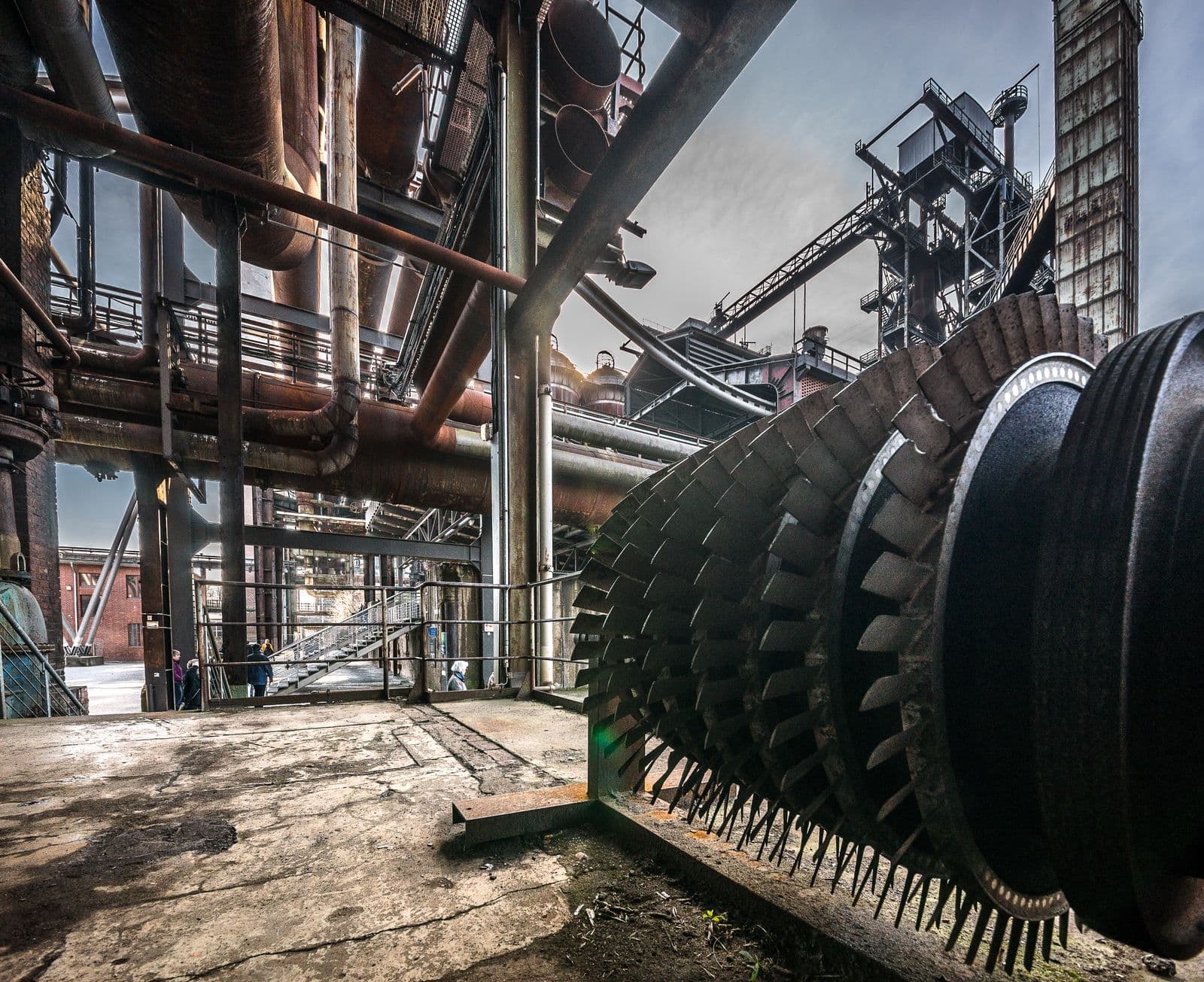
Inside an industrial production plant (illustrative image)

Investable Sub-Types

The main investment types worth considering in industry and manufacturing.

Factory investment
Organized industrial zone investment
Production facility
Assembly facility
Storage facility
Plastics / packaging
Textiles
Furniture
Metal / steel
Machinery
Chemicals
Building materials
Food production
Medical product manufacturing

Where Can You Invest?

Organized industrial zones that stand out for industrial investment.

İskenderun II OIZ

A 78-hectare industrial zone with a logistics advantage through its port connection.

Erzin OIZ

A 175-hectare zone standing out for its 2026 expansion investments.

Hassa OIZ

At 1,347 hectares, Türkiye's 3rd-largest OIZ; at the border's zero point, targeting food/packaging/cold storage, textiles, auto parts and logistics.

Antakya OIZ

Established in 1995, preferred for its proximity to the central district.

Investment Models

Different ways to bring your production facility to life.

01

Building on an OIZ Parcel

Taking a ready-infrastructure parcel and building a facility tailored to your needs.

02

Leasing / Buying a Ready Factory

Leasing or purchasing an existing factory building within an OIZ to reach production quickly.

03

Joint Venture (JV)

Partnering with a local producer to combine market knowledge and capital.

04

Subcontracting / Contract Manufacturing

Entering the market through contract manufacturing at an existing facility before setting up your own.

Licensing & Permit Process

The core steps to complete before setting up a production facility.

  • Parcel allocation application to the relevant OIZ directorate
  • Environmental Impact Assessment (EIA) process, by facility type
  • Building permit and building inspection firm assignment
  • Business opening and operating license
  • Industrial registry certificate
  • Investment incentive certificate application

Incentives & Support

Tax breaks, SGK premium support (extended through 2028) and customs exemptions apply under Region 6. Sectors under NACE codes 10-32 and 38.2 also have additional support through the end of 2026. Ready OIZ infrastructure compounds these advantages with land-cost savings.

Local Stakeholders

The main institutions you'll be in contact with during the process.

Relevant OIZ directorate and board
Hatay Chamber of Commerce and Industry
İskenderun Regional Port Authority
Provincial Directorate of Industry and Technology
Building inspection firms
Logistics and freight companies

Our Feasibility Approach

The feasibility of an industrial investment rests on data like raw material and market access for the target sector, OIZ parcel cost against ready-infrastructure savings, the support amount available under incentives, and employment/production capacity projections.

Our feasibility work helps us jointly identify the OIZ and incentive combination best suited to your sector.

From the official data

Port Cargo and Exports: Official Volumes

According to the Ministry of Transport and Infrastructure, Turkish ports handled 553,268,303 tonnes in 2025; the İskenderun Regional Port Authority handled 70,905,737 tonnes, third after Aliağa (89,507,150 tonnes) and Kocaeli (83,939,975 tonnes). In the Ministry of Trade's exports-by-province-of-activity table, Hatay ranked 11th in 2023 with USD 5,170 million.

IndicatorValueYearSource
İskenderun Regional Port Authority: cargo handled (tonnes)70,905,7372025[1]
Türkiye total port cargo (tonnes)553,268,3032025[1]
İskenderun's share of the national total12.8%2025[1]
Hatay exports by province of activity (USD million)5,8562022[2]
Hatay exports (USD million; annual change −11.7%)5,1702023[2]
Share of Türkiye's exports (Türkiye: USD 255,809 million)2.0%2023[2]
Hatay exports, single month (USD million; +11.9%)505 → 565Sep 2024 → Sep 2025[3]

What does this data mean for an investor?

The İskenderun Regional Port Authority handles 12.8% of the cargo moved through Turkish ports and trails only Aliağa and Kocaeli. This volume shows that Hatay remained one of the country's main cargo gateways even after the earthquake. Hatay's exports fell 11.7% in 2023 to USD 5,170 million; in September 2025 monthly exports rose +11.9% on the same month of the previous year. A single month does not prove an annual recovery; the annual 2024–2025 figures are not in this compilation.

What it means for an investor: port and export volumes are the most concrete official gauges of the scale of demand for warehousing, bonded areas, logistics centres and export-oriented production. But how much of the port tonnage is cargo produced in or destined for Hatay, as opposed to transit, cannot be separated from these data; cargo type and country breakdowns should be queried separately before investing.

Limitation: The port figure is the sum of all ports under the İskenderun Regional Port Authority and has no cargo-type or country breakdown. The export table is based on place of production (province of activity), which differs from head-office-based tables. Annual provincial exports for 2024 and 2025 (the Ministry's relevant file could not be accessed) and the sector breakdown of exports are not in this compilation; September 2025 is a single-month figure.

Industrial Infrastructure: Small Industrial Estates and OSB Facilities

The 2026 Investment Programme lists eleven small industrial estate (KSS) items in Hatay, plus wastewater treatment plants for the Antakya and Payas organised industrial zones (OSB). The largest KSS item is Ayakkabıcılar KSS (TRY 4.80 billion, 2007–2029), with a 2026 allocation of TRY 3.12 billion.

IndicatorValueYearSource
Ayakkabıcılar KSS (shoemakers' estate)TRY 4.80 billion · 2007–20292026[1]
Antakya Central KSS, phase IITRY 4.00 billion2026[1]
Belen KSSTRY 3.78 billion2026[1]
Samandağ KSSTRY 3.00 billion2026[1]
Antakya OSB and Payas OSB treatment plants (each)TRY 549 million2026[1]
İskenderun OSB rail siding (4.5 km)TRY 223 million2026[1]

What does this data mean for an investor?

The KSS projects aim to resettle tradespeople and small-scale production (shoes, furniture and similar) after the earthquake, and, judging by their names, are spread across districts (Antakya, Belen, Samandağ, Arsuz, Hassa, Kırıkhan). The OSB treatment plants and rail siding are items that close infrastructure gaps for larger-scale production. For a new industrial investor, the table shows where the public side stands on parcels, wastewater and rail connection.

Limitation: The programme items are public investment; occupancy of the OSBs, number of firms, employment, output and export data are not in this source and must be complemented with data from the Ministry of Industry and Technology, the relevant OSB directorates and the Ministry of Trade. Which sector a KSS serves is inferred from the programme names.

Post-Earthquake Production and Debris Management: Development Agency Records

DOĞAKA's 2025 Activity Report records that a 1,125 m² common production facility was built for the Antakya Tanners' Estate destroyed in the earthquake, that Hatay YİKOB's earthquake-debris processing project was contracted under the 2025 CMDP, and that the private-sector Green Transformation Technical Support Programme received 8 applications (6 successful).

IndicatorValueYearSource
Antakya Tanners' Estate: common-use facility (m²)1,1252025[1]
Leather Common Production Facility: statusLicence done; transfer approved; electricity connection pending2025[1]
Processing Earthquake Debris with Zero-Waste Awareness (YİKOB, 2025 CMDP)Contract signed; tender preparations under way2025[1]
Green Transformation Technical Support Programme: applications · successful8 · 62025[1]
Furniture-sector development axes support programmeNot implemented; removed from the 2026 programme2025[1]

What does this data mean for an investor?

The records show post-earthquake recovery moving at two speeds: a common facility for small-trade production has been built and is nearly ready (electricity connection pending), while debris recycling is still before tender. Debris processing shows the public side starting the process for a demolition-waste recycling investment; but debris volume, plant capacity and revenue model (gate fees, secondary-product sales) are not in this source (interpretation). The furniture support programme not being implemented suggests not relying on a ready support channel in that sector.

Limitation: The source is the development agency's own activity statement; project statuses relate to the period of the report and may have changed. It contains no amount, capacity or debris-volume data.

Figures come from official sources; interpretations are Invest Hatay's own and are not investment advice.

Frequently asked questions about industrial investment

As of 2026, expansion investments are underway at Erzin and Hassa OIZs; new parcel allocation can move comparatively faster in these zones. We confirm the current status on your behalf.

Let's define your industrial investment idea together

Tell us your sector, capacity target and budget, and we'll map out a plan built for you.