Skip to content
Invest HatayInvest Hatayby Burç Consulting

Construction & Building Technology Investments

With 153,755 homes and workplaces completed in Hatay and more under construction, strong demand exists for everything from prefabricated construction to seismic-resilient building technology.

Why Invest in Construction Technology in Hatay?

Hatay's urban transformation and reconstruction process continues through both TOKİ and private-sector build-for-land-share projects, creating a steady, high-volume demand in areas like building materials, steel structures, concrete technology and insulation.

The current standards of Türkiye's 2018 Building Earthquake Code make seismic-resilient building technologies like prefabricated and modular construction stand out on both speed and safety, and local production capacity in these areas hasn't yet reached demand.

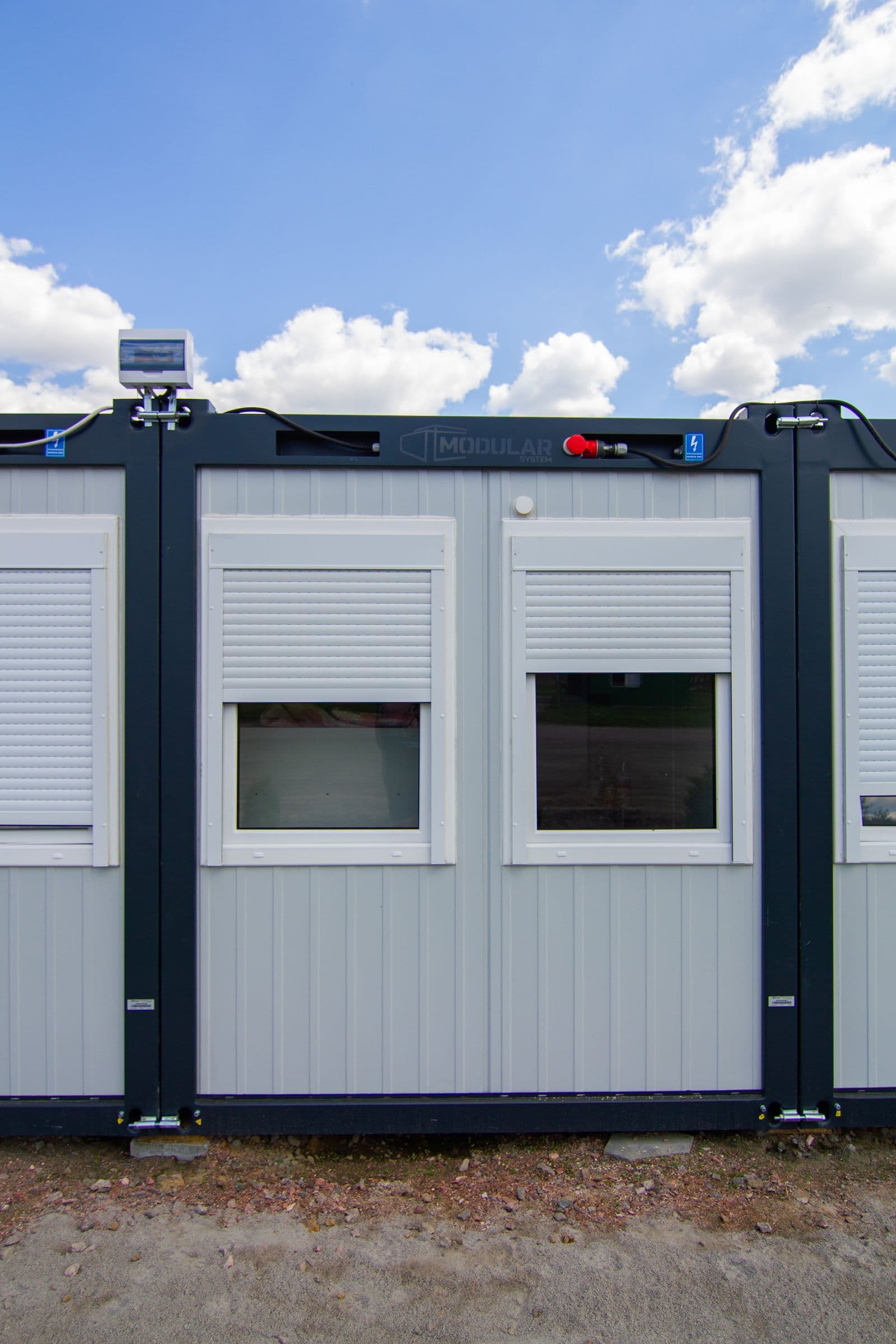
A modular prefabricated building unit (illustrative image)

Investable Sub-Types

The main investment types worth considering in construction and building technology.

Prefabricated construction
Modular construction
Seismic-resilient building technology
Building materials factory
Steel structures
Concrete technology
Insulation
Facade systems
Smart building
Green building
Construction technology
Urban transformation projects

Where Can You Invest?

Districts that stand out for construction and building technology investment.

İskenderun, Erzin, Antakya OIZs

Ready industrial infrastructure for building materials and steel structure production.

Antakya and Defne

Areas with concentrated urban transformation projects, offering direct project partnership opportunities.

İskenderun

A logistics advantage for building material import/export, given its port connection.

Kırıkhan

A suitable location for a regional production facility, given its access to central districts.

Investment Models

Different ways to bring your building technology investment to life.

01

Production Facility Establishment

Setting up a building materials or prefabricated/modular construction production facility.

02

Contracting / Project Partnership

Joining existing urban transformation projects as a technology supplier or co-contractor.

03

License / Technology Transfer

Acquiring the regional license for a proven building technology from abroad.

04

Joint Venture (JV)

Partnering with a local construction firm to combine market knowledge and capital.

Licensing & Permit Process

The core steps to complete before setting up a building technology facility.

  • Industrial registry certificate and production facility license
  • TSE/CE compliance certification for building materials
  • OIZ or industrial zone parcel allocation
  • Environmental compliance certificate (for concrete/steel production)
  • Business opening and operating license
  • Contractor qualification certificate to participate in urban transformation projects

Incentives & Support

Region 6 incentives apply to building materials production too; manufacturing sectors under NACE codes 10-32 have additional support through the end of 2026. Public incentive and financing mechanisms geared toward urban transformation projects can also be considered.

Local Stakeholders

The main institutions you'll be in contact with during the process.

Provincial Directorate of Environment, Urbanization and Climate Change
OIZ administrations
Hatay Chamber of Commerce and Industry
Building inspection firms
Local contractors and developers
TOKİ regional directorate

Our Feasibility Approach

The feasibility of a building technology investment rests on data like construction volume and the number of ongoing projects in the region, the gap in existing local production capacity, raw material sourcing cost, and market demand for your technology/product type.

Our feasibility work gathers this data based on whether you're targeting a production facility or a project partnership model.

From the official data

Building Permits and Occupancy Permits: A Signal of New Housing Supply

According to TurkStat, dwellings with a building permit in Hatay numbered 8,064 in 2022, 3,970 in 2023, 34,671 in 2024 and 68,990 in 2025. Dwellings with an occupancy permit over the same years were 10,095, 1,600, 8,457, 24,476.

IndicatorValueYearSource
Dwellings with building permit8,0642022[1]
Dwellings with building permit3,9702023[1]
Dwellings with building permit34,6712024[1]
Dwellings with building permit68,9902025[1]
Dwellings with occupancy permit10,0952022[1]
Dwellings with occupancy permit1,6002023[1]
Dwellings with occupancy permit8,4572024[1]
Dwellings with occupancy permit24,4762025[1]
Hatay's share of national permits5.8%2025[1]

What does this data mean for an investor?

Hatay's share of national permitted dwellings in 2025 is 5.8%, and its share of occupancy permits 3.5%, while it holds 1.8% of Türkiye's population. Its permit share is therefore about 3.2 times its population share: construction activity is disproportionately intense.

In 2024–2025, 103,661 dwellings received permits against 32,933 that received occupancy permits, a ratio of about 3.1 to one. This suggests that a large share of permitted homes had not yet received occupancy by the end of 2025, i.e. may still be under construction. The two flows are not an exact stock difference (permit-to-occupancy can take years, and some permits are renewed or cancelled), so this is a directional signal, not a stock calculation.

What it means for an investor: homes receiving occupancy over the coming years can affect first-hand sales and rental supply. Before buying, the permit and occupancy status and the construction stage of a specific project should be verified separately in the official records.

Limitation: From Q2 2025 TurkStat widened coverage beyond municipalities to all authorities entitled to issue building documents, so the 2025 figure is not fully comparable with earlier years and the effect of the change in Hatay cannot be separated from the table. 2024–2025 data have been revised. Unpermitted buildings are out of scope; the data count dwellings, not quality or price.

Public Investment Programme: Where the State Is Investing in Hatay

The 2026 Investment Programme published by the Hatay Governorship lists 132 projects for Hatay, with a total project cost of TRY 335.2 billion and a 2026 allocation of TRY 37.4 billion. The 2025 programme had 146 projects, TRY 261.8 billion in total cost and TRY 32.8 billion in allocation. Amounts are nominal lira.

IndicatorValueYearSource
Transport & communications (21 projects)TRY 167.5 billion · 50.0%2026[1]
Agriculture (incl. dams, irrigation, flood control) (10 projects)TRY 95.6 billion · 28.5%2026[1]
Other public services (26 projects)TRY 33.0 billion · 9.9%2026[1]
Health (8 projects)TRY 23.0 billion · 6.9%2026[1]
Culture (43 projects)TRY 10.8 billion · 3.2%2026[1]
Education (23 projects)TRY 4.3 billion · 1.3%2026[1]
Energy (1 projects)TRY 1.0 billion · 0.3%2026[1]

What does this data mean for an investor?

About half of the programme (50.0%) goes to transport and 28.5% to agriculture (mostly dams, irrigation and flood control). Health takes 6.9%, education 1.3% and energy 0.3%. The 2026 allocation is 11.2% of total cost, so most projects are multi-year, with completion spread over 2027–2030.

What it means for an investor: the public programme shows the access and infrastructure base for private investment. The transport weight matters for logistics and trade, irrigation and dams for agricultural production and processing, and hospital and university projects for health, education and housing demand. A project's inclusion in the programme does not guarantee its completion date.

Limitation: The programme excludes 15 projects shared with other provinces (TRY 57.8 billion). Project cost is multi-year and nominal; it is not annual spending or an execution rate. Because culture and tourism were grouped as one sector in 2025 (“Culture-Tourism”) and as “Culture” in 2026, no sector-level year-on-year comparison is made.

Figures come from official sources; interpretations are Invest Hatay's own and are not investment advice.

Frequently asked questions about building technology investment

With fast delivery times and seismic-resilient design, prefabricated/modular construction offers a meaningful speed advantage over conventional construction in an ongoing reconstruction process.

Let's define your building technology investment idea together

Tell us your product/technology type, capacity target and budget, and we'll map out a plan built for you.