Skip to content
Invest HatayInvest Hatayby Burç Consulting

A Guide to Olive and Farmland Investment in Hatay

4/16/2026 · 7 min read

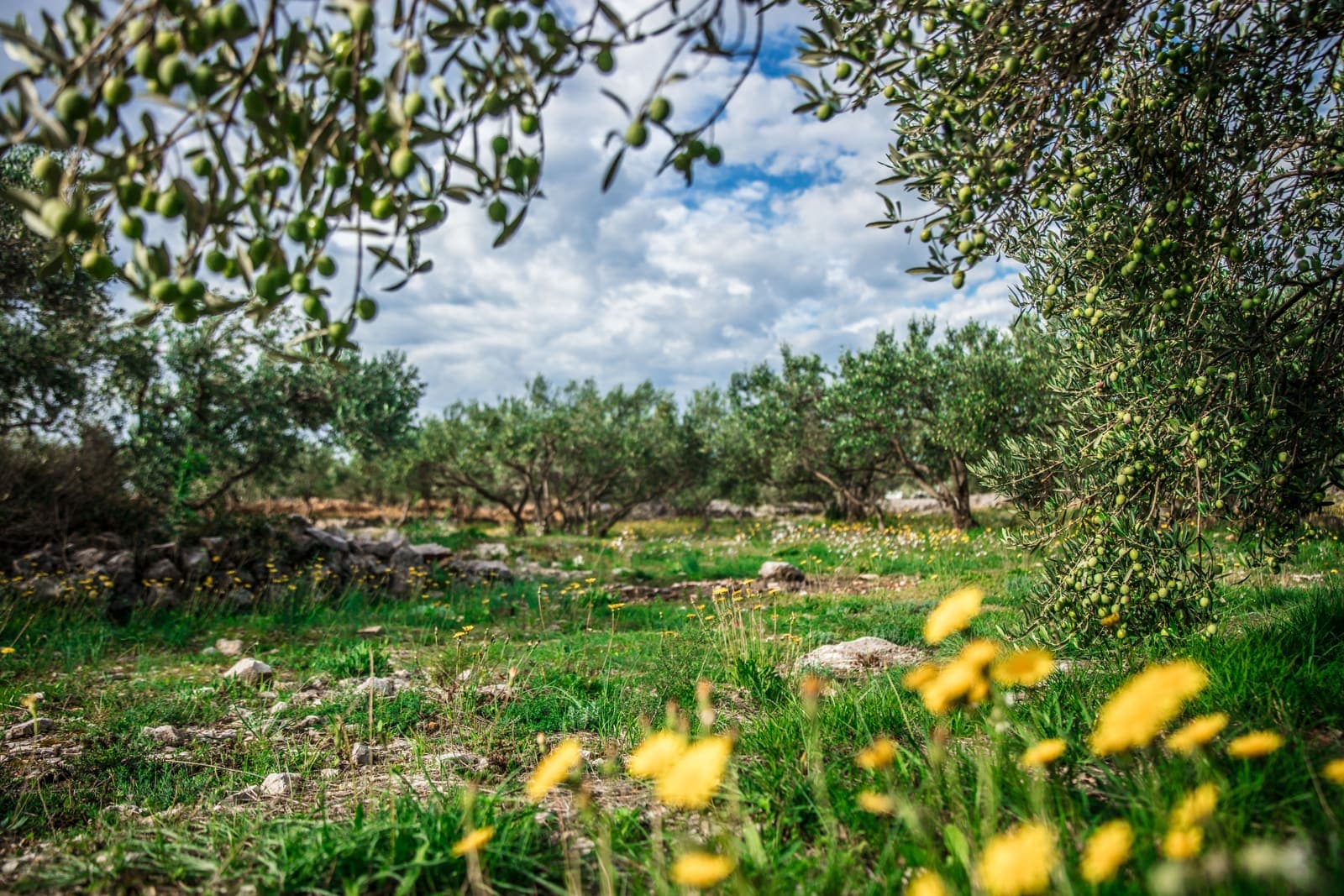
An olive grove (representative image)

Hatay is one of Türkiye's most productive olive and citrus-growing regions. This article covers what to check when investing in agricultural land here.

Which Areas Are Productive for Olives?

Olive groves concentrated on the foothills of the Amanos Mountains and in the plains near the coast form one of Hatay's most deeply rooted agricultural traditions. As of 2023, TÜİK data ranks Hatay 3rd in Türkiye for olive production (178,933 tons) and 5th for olive tree count (14.2 million trees), with Kırıkhan and its surroundings accounting for a significant share. Citrus production, meanwhile, concentrates more in areas near the coastline with strong irrigation access.

What to Check Before Buying Agricultural Land

  • Whether the title deed correctly records the land's designation (agricultural, pasture, forest, etc.)
  • Water-access rights and the condition of existing irrigation infrastructure
  • Whether current zoning opens the parcel to non-agricultural use
  • The age and yield of existing olive trees, if buying a planted grove
  • A comparative valuation against recent comparable land sales in the area

Production Income or Value Appreciation?

Olive land offers two distinct return models: regular income from olive and olive-oil production, and long-term land value appreciation. In some areas, as new zoning plans become clear, conversion potential from agricultural to building land can also come into play, but that should be treated as a concrete possibility grounded in the official zoning process, not a speculative bet.

Export Potential

Proximity to İskenderun Port makes it easier to export olive oil and citrus produced in the region. Production backed by the right processing and packaging infrastructure can reach international markets, not just the domestic one.

Conclusion

With proper due diligence, agricultural land investment in Hatay can offer both production income and long-term value appreciation as a measured investment vehicle. Through our Post-Earthquake Investment Opportunities service, we're with you from parcel selection to due diligence.

From the official data

Olive Data: Area, Trees and Support

In 2024 Hatay had 450,224 decares of oil olives and 122,046 decares of table olives; 14,323,857 fruit-bearing trees yielded 167,710 tonnes of oil olives and 55,715 tonnes of table olives. In 2025 the olive-oil deficiency payment went to 1,218 farms, covering 57,819 decares and totalling TRY 4.1 million.

IndicatorValueYearSource
Oil olives (area · output)450,224 decares · 167,710 tonnes2024[1]
Table olives (area · output)122,046 decares · 55,715 tonnes2024[1]
All olives (oil + table): area · trees572,270 decares · 14,323,8572024[1]
Olive-oil deficiency payment: farms1,2182025[1]
Olive-oil deficiency payment: area · amount57,819 decares · TRY 4.1 million2025[1]

What does this data mean for an investor?

Olive groves (572,270 decares) make up 56% of the province's fruit area. Farms receiving the deficiency payment average about 47 decares each and about TRY 3,331 per farm, which suggests olive growing is carried out by scattered, relatively small holdings (interpretation). For an oil-processing plant sourcing from small producers, building the supply network can matter as much as plant capacity.

Limitation: Tree and area data are for 2024; support data are for 2025 payments. Oil-olive output is fruit tonnage; olive-oil yield and prices are not in this source. Support amounts are nominal.

Dam, Irrigation and Flood-Control Investments

In the 2026 Investment Programme, agriculture is the second-largest item with 10 projects and TRY 95.6 billion. Amik-Afrin (Reyhanlı Dam and Irrigation) covers 58,516 ha of irrigation and 480 hm³ of storage.

IndicatorValueYearSource
Amik-Afrin (Reyhanlı Dam and Irrigation): irrigation 58,516 ha, flood 20,000 haTRY 31.7 billion · 1995–20302026[1]
Tahtaköprü Dam heightening and irrigation: irrigation 33,490 haTRY 17.5 billion · 2016–20302026[1]
Büyük Karaçay irrigation (3,554 ha) and Gönençay irrigation (4,468 ha)Irrigation area2026[1]
Hatay Earthquake-Resilient Cities (flood protection; channel improvement 14.6 km)TRY 38.0 billion · 2024–20282026[1]

What does this data mean for an investor?

The four listed irrigation projects together cover 100,028 ha. Amik-Afrin started in 1995 and runs to 2030; TRY 9.9 billion (31%) had been spent by the end of 2025. Water infrastructure is therefore a long-horizon investment whose completion date can slip.

What it means for an investor: growth in irrigable area is a main determinant of water access for farmland and greenhouse investments; whether a given parcel falls inside these project areas should be checked separately in the State Hydraulic Works (DSİ) records. Programme amounts do not guarantee when irrigation will enter service.

Limitation: Irrigation hectares are project scope, not the irrigated area in operation today, and the four-project sum should not be added to current irrigated land because areas may overlap. Amounts are nominal lira.

Figures come from official sources; interpretations are Invest Hatay's own and are not investment advice.