Skip to content
Invest HatayInvest Hatayby Burç Consulting

Truck Stop & Logistics Park Investment

Heavy commercial traffic along the Adana-Antakya-Syria border corridor creates sustained demand for a truck stop and logistics park combining rest, maintenance and consolidation services.

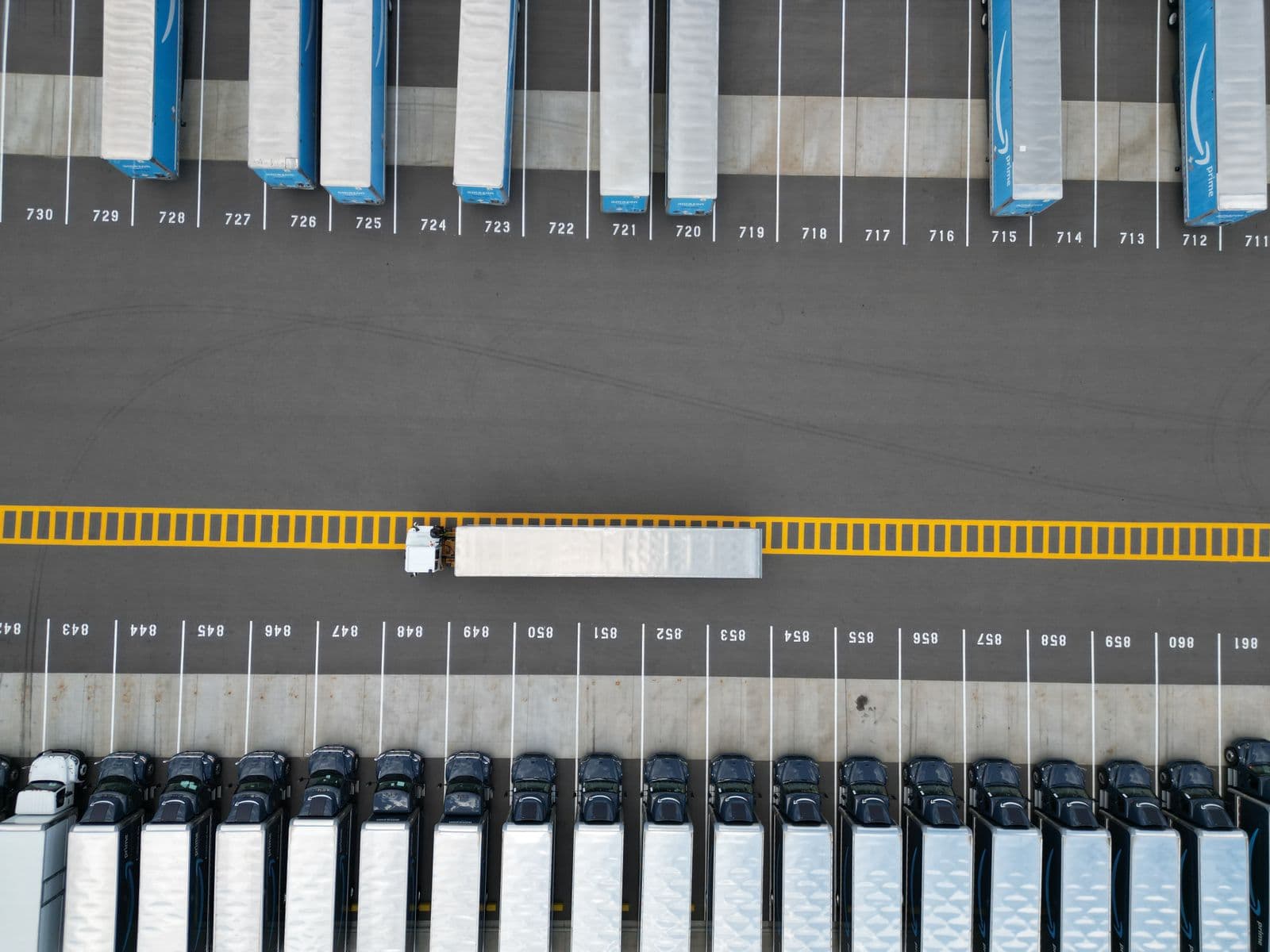
Trucks parked at a logistics facility

The Adana-Antakya-Syria border corridor carries heavy commercial vehicle traffic linking Turkey's industrial centers to Cilvegözü border crossing and Middle Eastern markets. A truck stop and logistics park offering rest facilities, vehicle maintenance and cargo consolidation services along this route serves a continuous and predictable flow of demand from freight operators.

What Project Types Can Be Considered?

  • Truck stop with rest facilities and driver amenities
  • Vehicle maintenance and repair service center
  • Cargo consolidation and transshipment facility
  • Combined truck stop and small-scale warehousing complex

Which Areas Should Be Considered?

The corridor between Antakya and Reyhanlı, along the main route to Cilvegözü border crossing, is the primary area given direct exposure to border-bound freight traffic.

Licensing and Permit Process

  • Construction and zoning permit from the relevant municipality
  • Fuel station license if fuel sales are included
  • Vehicle repair service registration
  • Workplace opening and operating permit

Incentive and Support Elements

Region 6 incentives apply to this type of logistics infrastructure investment; proximity to Cilvegözü border crossing adds a structural traffic advantage that reduces marketing dependency.

Explore our Investment Incentive Consulting service

Points to Keep in Mind

A truck stop's success depends heavily on its exact position along the corridor relative to competitor facilities and natural rest points; thorough traffic and site analysis before committing to a location is essential.

From the official data

Port Cargo and Exports: Official Volumes

According to the Ministry of Transport and Infrastructure, Turkish ports handled 553,268,303 tonnes in 2025; the İskenderun Regional Port Authority handled 70,905,737 tonnes, third after Aliağa (89,507,150 tonnes) and Kocaeli (83,939,975 tonnes). In the Ministry of Trade's exports-by-province-of-activity table, Hatay ranked 11th in 2023 with USD 5,170 million.

IndicatorValueYearSource
İskenderun Regional Port Authority: cargo handled (tonnes)70,905,7372025[1]
Türkiye total port cargo (tonnes)553,268,3032025[1]
İskenderun's share of the national total12.8%2025[1]
Hatay exports by province of activity (USD million)5,8562022[2]
Hatay exports (USD million; annual change −11.7%)5,1702023[2]
Share of Türkiye's exports (Türkiye: USD 255,809 million)2.0%2023[2]
Hatay exports, single month (USD million; +11.9%)505 → 565Sep 2024 → Sep 2025[3]

What does this data mean for an investor?

The İskenderun Regional Port Authority handles 12.8% of the cargo moved through Turkish ports and trails only Aliağa and Kocaeli. This volume shows that Hatay remained one of the country's main cargo gateways even after the earthquake. Hatay's exports fell 11.7% in 2023 to USD 5,170 million; in September 2025 monthly exports rose +11.9% on the same month of the previous year. A single month does not prove an annual recovery; the annual 2024–2025 figures are not in this compilation.

What it means for an investor: port and export volumes are the most concrete official gauges of the scale of demand for warehousing, bonded areas, logistics centres and export-oriented production. But how much of the port tonnage is cargo produced in or destined for Hatay, as opposed to transit, cannot be separated from these data; cargo type and country breakdowns should be queried separately before investing.

Limitation: The port figure is the sum of all ports under the İskenderun Regional Port Authority and has no cargo-type or country breakdown. The export table is based on place of production (province of activity), which differs from head-office-based tables. Annual provincial exports for 2024 and 2025 (the Ministry's relevant file could not be accessed) and the sector breakdown of exports are not in this compilation; September 2025 is a single-month figure.

Public Transport and Logistics Infrastructure Projects

In the 2026 Investment Programme, transport is Hatay's largest item with 21 projects and TRY 167.5 billion. The main projects are motorways, rail, the airport and port/industrial-zone links.

IndicatorValueYearSource
Dörtyol–Hassa motorway and railway (motorway 25 km, single-track rail 35.32 km)TRY 91.2 billion · 2022–20292026[1]
İskenderun–Topboğazı motorway and Antakya link road (motorway 19.2 km, twin-tube tunnel 8,675 m)TRY 33.6 billion · 2024–20292026[1]
Hatay–Osmaniye high-speed rail, double track (59 km; joint project)TRY 33.1 billion · 2026–20292026[1]
Hatay Airport runway/apron (PAT) repair (spent: TRY 14.0 billion)TRY 16.0 billion · 2023–20262026[1]
Hatay Airport buildings and apron expansionTRY 1.8 billion · 2025–20272026[1]
İskenderun OSB rail siding (4.5 km)TRY 223 million · 2020–20272026[1]
Eastern Mediterranean Customs and Foreign Trade Regional Directorate buildingTRY 384 million · 2024–20262026[1]

What does this data mean for an investor?

The two large road-rail projects (Dörtyol–Hassa TRY 91.2 billion, İskenderun–Topboğazı TRY 33.6 billion) make up more than half of the programme's transport cost. The Dörtyol–Hassa line links the coast with inland Hassa, and the İskenderun–Topboğazı line connects İskenderun towards Antakya. Their 2026 allocations are TRY 2.0 billion and TRY 4.5 billion, with completion foreseen in 2029.

The 2026 allocation for the Hatay–Osmaniye high-speed rail appears as only TRY 1,000, meaning the project is listed but its cash funding is still symbolic (interpretation). At the airport, TRY 14 billion of the TRY 16 billion runway/apron repair had been spent by the end of 2025. Together these show that logistics decisions should separate “advanced” from “planned” infrastructure.

What it means for an investor: for warehouse, customs, cold-chain and distribution investments, access conditions will change between 2027 and 2029. A decision today should be based on existing roads, with new links modelled separately as potential upside.

Limitation: Completion years are programme projections and may slip. This source covers public projects only; port cargo tonnage, border-gate crossings and private logistics investments are not included and should be tracked in separate official sources (Ministry of Transport and Infrastructure, Ministry of Trade, DHMİ).

Figures come from official sources; interpretations are Invest Hatay's own and are not investment advice.

Frequently asked questions about truck stop & logistics park investment

Through traffic volume analysis and assessment of existing competitor facilities; we conduct this as part of our site selection process.

Let's shape your truck stop & logistics park investment together

Tell us your service scope, location and budget, and we'll map out a plan tailored to you.